
Seven small municipalities and a single point of coordination for mobility in Alto Garda
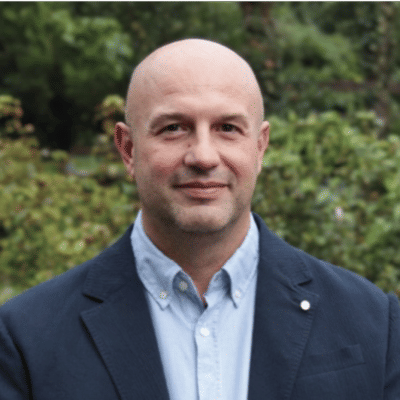

A conversation with Giovanni Johnny Perugini, municipal councillor in Nago-Torbole and member of the Assembly for urban planning and development of the Comunità Alto Garda e Ledro
Interview by Paolo Barbato with Giovanni Johnny Perugini.
The seven municipalities of Alto Garda and Ledro have more than 51,000 residents, but none of them is a provincial capital and the largest, Riva del Garda, has fewer than 18,000 inhabitants. By law, none of them is required to have a Mobility Manager. Workers, residents and tourists, however, move from one municipality to another every day regardless of the boundaries, and mobility in this area cannot be governed town by town.
A way forward already exists. Since 2023, municipalities with fewer than 50,000 inhabitants can join forces and appoint a shared Area Mobility Manager, and the Comunità Alto Garda e Ledro, which brings them all together and has its own mobility sub-plan (Piano stralcio della mobilità), could host one. It is the same logic Federica Tognini described to us in September for a mobility office shared by four Unions of Municipalities across Garfagnana, Lunigiana, Media Valle del Serchio and Appennino Pistoiese.
We spoke with Giovanni Johnny Perugini, who sits on the Comunità’s Assembly for urban planning and has experience in designing and managing mobility, to understand what it would take for the Comunità to act as coordinator and what role local businesses can play, even where the law does not require it of them.
The project in a nutshell
Paolo Barbato: In some of your speeches you have described traffic in Alto Garda as a structural problem, because it persists even after the summer is over. Can you briefly outline your proposal and the reasoning behind it?
Giovanni Johnny Perugini: I do two jobs that talk to each other: I have significant experience in designing and managing mobility and road traffic, and today I support businesses in their decisions. I bring the same method into politics, because analysis gives a proposal a concrete basis. The starting point is that traffic in Alto Garda is no longer a summer emergency, because it stays high for most of the year. That is why we propose to stop intervening municipality by municipality and to think in terms of the wider catchment area.
In recent years some interesting services have emerged: Bus&Go, the on-demand transport active in Riva del Garda, Arco and Nago-Torbole, and Rivetta, the link between the Fiera car park and the centre of Riva. The limitation is that neither of them is integrated with the general local public transport (TPL) network: timetables, stops and fares do not talk to each other, and no visible results can be seen in terms of traffic reduction. What is needed is an Area Mobility Manager who brings together the issues of private traffic, public transport and park-and-ride car parks, to be built quickly along the main access routes, in order to stop cars before they reach the towns.
The available traffic data are those released from time to time by the press and the Province, fragmented and unsystematic. The first step is therefore to measure, with origin-destination matrices for workers and tourists and real travel times. Then to decide.
From roads to mobility
Paolo Barbato: You distinguish between roads, meaning streets, asphalt and widenings, and mobility, understood as the integrated and sustainable management of how people move. How did this conviction take shape, starting from your professional background and your work in local government? And what place do infrastructures have in this vision?
Giovanni Johnny Perugini: This vision comes from my experience, gained in planning, and from observation in the field: roads are about vehicles, mobility is about people. Infrastructures have a role and I am not opposed to major works, which are needed to modernise the main network. On their own, however, they are not enough: they take a long time and risk being outdated by the time they arrive. The Garda cycle route is the clearest example. It is a project designed for tourism and as such it has value. But the sections built so far have cost tens of millions of euros, completion has no firm date and there is no evidence of any effect on daily traffic or on home-to-work commuting.
The issue is not the idea, but having placed it alongside sustainable mobility without assessing its overall impact and without integrating it with public transport and car parks. With the same resources and an overall design, much more could have been achieved for those who travel every day. The real problem lies in the effectiveness that works and projects must have: it should be measured by the traffic they reduce, not by the kilometres built or the funds spent. The same applies to the San Giovanni-Cretaccio link, which connects Vallagarina and Alto Garda: work has been going on for almost ten years, the last two lots are still missing, and nobody knows when it will open or how effective it will be, given the changed socio-economic conditions. It also applies to the Torbole bypass, currently at the design stage: it is being assessed with existing data, more with a view to saving money than to effectiveness.
Beyond municipal boundaries
Paolo Barbato: You write that mobility knows no administrative boundaries. Why is it sometimes so hard for areas to think together, and what does it take for neighbouring municipalities to stop acting in a scattered way: rules, shared coordination, a different culture? What is the lever that is making your Comunità di Valle work in a virtuous way?
Giovanni Johnny Perugini: I have to be frank: the virtuous lever is not there yet. The Comunità di Valle has the tools to act as coordinator, the Piano Stralcio della Mobilità and the Piano Territoriale di Comunità, but on mobility the choices of individual municipalities still prevail. I see it as leader of the opposition group and as a member of the Planning Assembly. It is not ill will: each administration answers to its own citizens, and accepting a local compromise for an area-wide benefit requires mutual trust.
Our proposal is an Area Mobility Manager based at the Comunità, with a mandate from the mayors, supported for example by an agreement between municipalities and flanked by a table with economic and social stakeholders. On that basis, taxis and private hire with driver (NCC), on-demand transport for outlying hamlets with the Third Sector, and even the location of welfare services along the main mobility corridors can be reviewed in a coordinated way. Mayors need technical support and reliable data: with those, deciding together becomes simpler.
Work as a lever
Paolo Barbato: Home-to-work trips are among the most regular flows and therefore the most manageable. Even where the law does not require businesses to deal with their employees’ journeys, what role can companies, hotels, public bodies and their Mobility Managers play in changing the mobility of an area?
Giovanni Johnny Perugini: They have a decisive role, but it takes a joint effort between public and private. A good company Mobility Manager also works on how time is organised: moving a shift by a few minutes can eliminate dead waiting time for public transport and make it worthwhile. That is why I believe in local area tables (Tavoli di Zona), where neighbouring businesses, I am thinking of hotel or industrial districts, coordinate timetables and flows instead of each one reasoning for itself. GoGreen, a public-private project going in this direction, is already under way in the area. I propose, however, a more targeted alternative: a specific Mobility Manager for each category of local business, such as hotels, industry and craft businesses. Each would bring the specialist needs of their sector and talk to the others and to the Area Mobility Manager, for tailored solutions. Then there is district carpooling, which eases pressure on company car parks and main roads at peak times, and remote working for activities that do not require physical presence: fewer unnecessary journeys and, for businesses but also for the employees involved, a concrete saving, which for workers means recovering real value from their salary. A cultural question remains: assessing the result of work rather than physical presence.
Welcoming visitors, living well for residents
Paolo Barbato: You speak of an Alto Garda that is welcoming to visitors but built around those who live there. How do you reconcile tourism and everyday liveability, for those who live and work there every day, and what changes in the way we think about mobility?
Giovanni Johnny Perugini: Tourism is an essential part of the economy and should not be set against residents: my goal is precisely to avoid that conflict. Today, though, in spring and autumn I receive reports from citizens who struggle to get to their own homes, and this wears down coexistence. There is also an often overlooked social aspect: in families with only one car, used for work, teenagers and elderly people risk being excluded from sport, social life and services because the alternatives are insufficient.
Visitors need connections with reliable timetables and regular frequencies to Rovereto railway station and Verona airport, and shuttles equipped for those travelling with bikes, climbing gear or water sports equipment. One principle applies to everyone: collective transport must beat the car on journey times, because nobody gives up a faster means of transport for a slower one, however cheap. Only once these conditions are in place will it be possible to introduce bold choices that remove non-residents’ traffic from the town centres.
Alto Garda in five years
Paolo Barbato: If your vision came true, what would Alto Garda look like in five years for those who travel every day? What are the realistic first steps, and who should take them?
Giovanni Johnny Perugini: I propose the Riva-Torbole stretch as a test bed, since for eight months a year it is a critical point for those who work and travel every day. It is a measurable goal: survey the flows today, with a single methodology, and check them again after five years, with specific corrective measures designed to shift journeys from private vehicles to public transport.
The first steps fall to the Comunità di Valle and the municipalities. My proposal is that the Comunità appoints the Area Mobility Manager, equipped with data analysis tools; that the municipalities jointly plan park-and-ride car parks on the edges of the towns, in locations that are also useful to neighbouring municipalities; and that TPL, Bus&Go, Rivetta, taxis and NCC are integrated into a single system with frequent services.
Once the alternatives are in place, regulatory measures are needed: inter-municipal limited traffic zones (Ztl) and Zone di Rilevanza Urbanistica (Zru), which give residents of the whole of Alto Garda more freedom of movement and limit access from outside, and a single parking tariff for the area with concessions for residents. If it works, those who travel that stretch every morning will take less time and with more certainty.
Advice for other areas
Paolo Barbato: If you had to give advice to an administrator in another area who wants to think beyond municipal boundaries, what would it be? And what would you ask of the company Mobility Managers reading this newsletter, and of the businesses they work for, to get started?
Giovanni Johnny Perugini: To administrators I would say: plan by territorial area, involve associations and businesses from the outset and take responsibility for far-sighted choices, even when the results arrive after the end of your term. To businesses I suggest seeing employee mobility not as an expense but as a tool for corporate welfare and cost containment, one that makes them more attractive as employers. I also suggest a Mobility Manager for each category, bringing the specific needs of the sector.
Of company Mobility Managers I ask that they combine models and data with direct observation, going into the field to check that measures really work. To technical experts I say that our credibility depends on independent judgement: rigorous analysis is the most useful contribution we can make to political choices.
Giovanni Johnny Perugini is a management consultant and freelance professional with significant experience in mobility planning and management. Since 2015 he has been a City Councillor in Nago-Torbole, where he leads the minority group, and since 2022 a member of the Planning Assembly of the Comunità di Valle Alto Garda e Ledro. He is vice-president of ONDA, a cultural and political association that promotes integrated, inter-municipal mobility management.