
The last mile is private: where the public network meets the corporate mobility plan
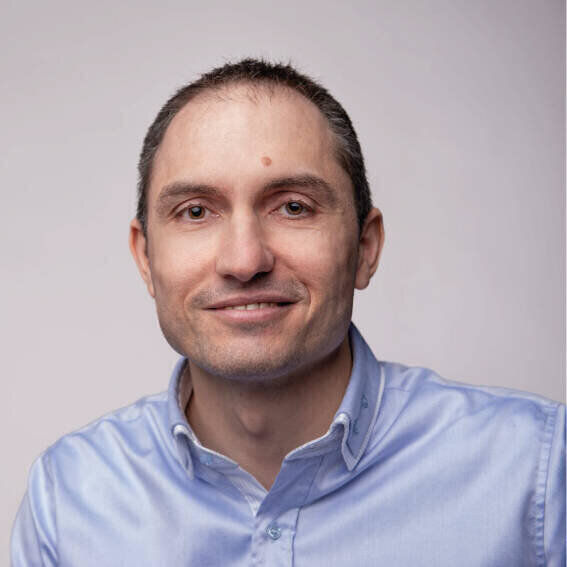

A conversation with Ivano Marchiol, Councillor for Mobility, Public Works and Public Green Spaces of the City of Udine.
Interview by Paolo Barbato with Ivano Marchiol.
In December 2024 the City of Udine decommissioned UdineBike after fifteen years of service. The system was tied to fixed stations inside the urban ring and in recent years had shrunk to 45 bicycles actually in working order. In its place, from 8 January 2025, a free-floating fleet of 380 vehicles spread across the whole municipal area, half of them pedal-assisted. The first year closed with 69,266 rentals.
In the first four months of 2026 there were 20,938 trips against 9,062 in the same period of 2025, growth of 131%. It is the figure the administration communicated, and it is correct. It is worth breaking it down, though, before taking it as a term of comparison, because it holds together three different pieces of information.
The first concerns the basis of comparison. January to April 2025 are the start-up months, with 1,123 trips in January alone, the month when the vehicles were positioned across the territory: part of the growth measures the distance between a service that has just been born and one running at full capacity. The second concerns the difference between trips and people: monthly active users went from around 624 to around 900, an increase of 44% against rentals that grew by 131%. The third concerns declared use. A survey carried out by RideMovi among its own users indicates that 57.5% cycle for systematic journeys and 31.8% to get to work, but it remains a figure collected by the operator on a self-declared basis, not a measure of cars actually replaced.
The most solid figure for anyone working on home-to-work mobility is another one, and it concerns the composition of the fleet. The 190 pedal-assisted bicycles, exactly half of the vehicles on the road, produced 49,718 of the 69,266 rentals in 2025, 72% of the total, a share that rose to 77% in the first four months of 2026. The monthly peak of 2025 did not fall in August but in September, with 10,848 trips. On a service designed for everyone, demand concentrates on the vehicle that widens the range that can be covered and reduces effort, in the month when people go back to work and school.
In parallel, Udine is building the fixed infrastructure. On 13 April 2026 the works on the first lot of the regional FVG4 cycle route were handed over on the stretch towards Campoformido: a 3.7 million euro intervention financed by the Region, of which 1.3 for the restoration of the canal bridge crossing the A23 motorway and 2.4 for the cycle path itself. Completion is expected in the first months of 2027. The direction is that of the productive hinterland west of the provincial capital.
We asked Ivano Marchiol what planning decisions lie behind those numbers and, above all, where what an administration can do comes to an end. It is a question that closely concerns anyone who, inside a company, has a say in choosing where to open or move a site and is starting to assess it also on the basis of how employees will be able to reach it. What follows is the thread of the conversation.
The service model as a planning choice
Paolo Barbato: Councillor, a doubling of rentals in one year is almost always told as a change in citizens’ habits. We are interested in the level below, the one that usually stays invisible: where to put the vehicles, how to design the drop-off points, which parts of the city to serve first. If you had to name the planning decision without which those numbers would never have arrived, which would you choose?
Ivano Marchiol: A result like this is the direct fruit of a radical change in urban planning. To understand the scale of this leap it is enough to look at the numbers and the difference between the two management models. Until 2024, with the old UdineBike system, we had a rigid and by then obsolete model, tied to 24 fixed stations and to exclusively muscle-powered, dated vehicles. The system had progressively shrunk from 90 to only 45 bicycles actually in working order, with few rentals concentrated mainly around the historic centre and an entirely marginal use. From 2025 to today, with the new system with RideMovi, we have revolutionised the infrastructure by putting on the ground a fleet of 380 bicycles (190 of them pedal-assisted), extending the service across the whole municipal area. The numbers immediately proved this choice right: in the first year of the new course (2025) we closed with almost 70,000 rentals in total, five times the numbers of the old system. In the first four months of 2026 we recorded a further +131% of trips compared with the same period of the previous year (more than 20,900 rentals against about 9,000 in 2025), with impressive growth in e-bike use (+204%).
If I have to name the strategic move that counted most, it was the choice of the mixed use system, tailored to the shape of Udine. In the historic centre (inside the urban ring) we set up more than 50 virtual stations, clearly identified through the app. This guaranteed order and certainty about the drop-off point. Outside the ring and towards the neighbourhoods we activated the free-flow mode (free-floating).
Without this decision the numbers would never have arrived. Shared mobility often fails because it stays rigid and confined to the city’s “living room” as a tourist service. Allowing free floating in the neighbourhoods has turned bike sharing from a simple supplementary service into a genuine personalised area public transport, able to cover the notorious “last mile” for students, workers and commuters who travel daily and independently to and from the neighbourhoods, the university sites and the station.
When the network meets workplaces
Paolo Barbato: With FVG4 the cycle network points towards the productive hinterland to the west, where many workplaces are concentrated. Our readers, inside companies, often have a say in choosing where to open or move a site and are starting to assess it also on the basis of how it can be reached without a car. The dialogue between those who plan the city and those who decide where a business is located still seems to me a missed opportunity, though. What would change if it became standard practice?
Ivano Marchiol: For decades urban planning and corporate planning have moved on parallel tracks: companies chose their location looking almost exclusively at motorway accessibility and the availability of parking, while municipalities planned public mobility often after the fact. We have to move beyond this paradigm. With the construction of the FVG4 cycle route now under way and of the connection towards the productive area west of Udine, we are highlighting how much the active mobility network must serve workplaces. The same goes for the cycle spine towards the south, whose works are out to tender and will start within the year. Industrial and commercial areas cannot be islands reachable only by car.
Today the dialogue between the public administration and the business fabric is starting to change. The most innovative companies are asking for cycle connections and public transport stops because they know that sustainable accessibility is a strong lever for attracting talent and reduces employees’ stress. As an administration, we are putting the mapping of productive and office hubs at the centre of the Sustainable Urban Mobility Plan (PUMS) that we are drawing up.
If the dialogue became systematic practice, planning together would mean preventing an industrial area from being born already saturated with traffic and asphalted yards. If a company knows in advance that the city will bring a cycle spine or an efficient transport line there, it can design its own site by reducing the space given over to car parking and investing in green areas, social spaces or services for workers. It is an economic gain for the business and an environmental benefit for the community.
The private last mile
Paolo Barbato: There is a point where public infrastructure stops, and it is the company gate. The last link depends on the employer: the covered bike rack, the changing room, the agreement with the sharing operator. That is where an excellent cycle network risks going unused. What do you ask of companies in the area today, and what can you offer them in return?
Ivano Marchiol: An excellent cycle infrastructure loses much of its effectiveness if, once you arrive at your destination, you don’t know where to leave your bike safely, or if there is nowhere to change after cycling in the rain. The “private” last mile is decisive.
We ask companies in the area to become mobility partners. Two very useful things companies can do are, on the one hand, to guarantee internal services, that is to install covered, dedicated and secure bike racks (or company bike stations), sockets for recharging e-bikes and changing rooms with showers for those who choose active mobility; and secondly to appoint, value and properly engage the figure of the company Mobility Manager, creating a direct channel of dialogue with the City’s Mobility Manager in order to calibrate schedules and services.
For its part, the administration can promote agreements for the use of corporate bike sharing and incentives for Bike-to-Work, can work together to connect the public cycle path safely with the entrance to the company site, removing obstacles or critical points, and can publicly recognise “Cycle-Friendly” companies, showing that those who invest in the health and mobility of their own employees help improve the air quality and the quality of life of the entire city.
Designing starting from those with the most constraints
Paolo Barbato: At Velo-city you said that disability does not concern separate categories: a parent with a pushchair, an elderly person, someone with a temporary injury are all in the same boat. Taken inside a company, that principle overturns the way a mobility plan is built, because it is designed starting from those with the most constraints instead of from the average employee. What would you say to a company that sees accessibility only as an obligation to discharge?
Ivano Marchiol: When you design a public space, or a corporate mobility plan, starting from those with the greatest constraints, that is people who move in a wheelchair or have reduced mobility, the resulting infrastructure becomes infinitely more fluid, safe and comfortable for everyone. A kerb blended in without steps helps the wheelchair, but it also helps the pushchair, the delivery trolley and the person on a bicycle.
To a company that considers accessibility only a regulatory requirement or a cost to be contained, I would say three things. The first is that accessibility is an indicator of design quality and of efficiency: an accessible company removes daily micro-obstacles, reduces workplace injuries, improves overall ergonomics and optimises internal travel times. The second is that a work environment free of physical and cultural barriers attracts a wider pool of skills and talent and creates a calmer, more collaborative company climate. And finally the third is that designing starting from fragility is not a special measure for “someone”, it is safety for everyone: it means building a more solid, modern, flexible and resilient organisation. Inclusiveness is the investment with the best return in social and economic terms.
Ivano Marchiol
Ivano Marchiol is Councillor for Public Works, Mobility and Public Green Spaces of the City of Udine. In June 2026 he was the only administrator from Friuli Venezia Giulia invited to speak in a plenary session at Velo-city, the world cycling summit hosted in Rimini. His public commitment is tied to the theme of universal accessibility as a criterion for designing urban space.
Ivano Marchiol is Councillor for Public Works, Mobility and Public Green Spaces of the City of Udine. In June 2026 he was the only administrator from Friuli Venezia Giulia invited to speak in plenary session at Velo-city, the world cycling summit hosted in Rimini. His public work is tied to universal accessibility as a design criterion for urban space.