
The plan is the data factory: a conversation with Paolo Gandolfi
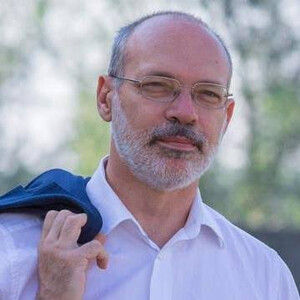

An interview by Paolo Barbato with Paolo Gandolfi.
Paolo Gandolfi is a rare figure in the Italian mobility management landscape, because he has crossed this field from three different positions. He worked on legislation as a member of parliament, he governed local policy as a city councillor, and today he deals with day-to-day implementation inside a municipality.
As a legislator he followed measures that were central to mobility and road safety, including the law on road homicide, the law on cycling mobility and the enabling act for the reform of the Codice della Strada. As a local administrator he was city councillor for mobility in Reggio Emilia from 2007 to 2013, contributing to the construction of a cycling system recognised beyond national borders. Today he works on the administrative implementation side, between urban planning, sustainable mobility and complex infrastructure projects.
This trajectory makes the conversation particularly useful, because it allows the plan to be read not as an isolated document, but as part of a wider chain. First comes the rule, then comes the plan, then come the data, public decisions and real behavioural change. Gandolfi also sits on the MIT Technical Committee on Mobility Management, on the working group for the Piano Generale della Mobilità Ciclistica and on the same Ministry’s Road Safety Committee, and he has an international profile as a European expert and speaker in networks dedicated to sustainable urban mobility.
From writing the rules to applying them
Paolo Barbato: You have written national transport legislation and today you apply it as a municipal director. Where is the biggest gap between what regulation provides for and what a municipality can really put into practice?
Paolo Gandolfi: There are three significant gaps between the legislative approach and the practical implementation of mobility measures. The first gap is one of expertise. Urban mobility is a complex and very specific subject, which finds no fully competent technical structure within the state, neither in the ministries, nor in Parliament, nor in support structures. The subjects of “transport” and “infrastructure” that the ministry has historically dealt with are very distant and different from urban mobility. This produces the backwardness of national legislation compared with the level of experience and expertise of cities.
The second gap concerns experience. As in the previous case, the absence of technical experience in municipalities keeps national legislation permanently in a limbo of abstraction that makes it ineffective in the management of cities, and the same can be said of the absence of administrative experience among those who arrive in Parliament and do not understand the real questions that come from citizens’ everyday experience.
Finally, the third gap is consent. When you write a rule you imagine a mechanism that has to work in an orderly and replicable way, but when you then apply it inside a municipality you discover the endless pitfalls of consent, which is expressed every day on every single act and not through opinion polls, but through a direct relationship. This sometimes undermines the administration’s ability to turn an obligation into a concrete choice.
The plan as a data factory
Paolo Barbato: You have described the plan as the data factory. What do you mean, and why does this reading change the role of the Mobility Manager?
Paolo Gandolfi: Citizens, and sometimes administrators too, often misunderstand the term “mobility manager” as an all-powerful figure in the field of mobility, able to tackle the major mobility problems of cities. In reality we know that the Mobility Manager’s is a more limited role, but one that can be more or less effective depending on whether or not it is carried out within the framework of a mobility plan. Without a Piano Urbano della Mobilità Sostenibile behind it, the MM’s action and the Piano degli spostamenti casa lavoro too can turn out to be pointless or ineffective. The plan is the place where the raw material of mobility management is produced, into which people’s real travel needs can be inserted.
That data is far more useful than generic aggregates, because it makes it possible to get into the exceptions, the specific cases and the areas where an intervention can really work. If Mobility Managers experience plans as paperwork, they lose the most valuable part of the job. If they consider them a data factory, they hold the instrument for formulating verifiable proposals, not just intentions.
What makes a cycle lane genuinely used
Paolo Barbato: Reggio Emilia has invested in cycling for years, ever since you were councillor. Looking at systematic commuting data, what made the difference between a lane that is used and one that is underused?
Paolo Gandolfi: Infrastructure is needed, but on its own it is not enough. The fact that a cycle lane exists does not automatically mean that it gets used. The difference is made by the network, the continuity of the routes and the possibility of using the bicycle for ordinary trips, knowing where to leave it while at work, feeling safe in traffic and other aspects. What is more, cycling is not an activity to be done in certain places, it has to become possible and safe across the whole city road network instead. All streets must be cyclable and it is on the busiest ones that bikes must move on a separate network of their own.
For the home-to-work journey what counts above all is the normality of the choice. A lane works when it lets people really get where they need to go, in a safe, legible and continuous way. In Reggio Emilia the work was built on the system, not on the individual stretch.
Coming back to the question of an overall vision, that of a Plan, it has to be said that here too the most significant leap forward for cycling mobility came in 2011, when the parking plan considerably extended the paid parking area. As always, citizens make their choices within a rebalancing of the attractiveness of one mode over another. If the car can go and park anywhere, simply offering other modes of transport will not produce significant results.
Road safety, Città30 and mobility management
Paolo Barbato: You were the rapporteur for the law on road homicide. What relationship do you see between road safety, Città30 and the work of Mobility Managers, subjects that today often travel on separate tracks?
Paolo Gandolfi: Road homicide was predominantly a battle about justice. I do not much believe in the maieutic capacity of punishment. But I found it unbearable, in terms of justice, that in cases of road homicide with a profile of gross negligence or even indirect intent, such as driving drunk or on drugs or overtaking at a pedestrian crossing, to give two examples of aggravating circumstances, there was no justice for the victims and their families. To win the safety battle in cities you have to work on reducing speeds. Apart from very rare cases, such as the blind spot of lorries, the reasons for death or serious injury in road accidents are down to speed, often inadequate for the context in which the accident happens and in any case the primary cause of the damage produced by the impact. There is no future for cycling or walking if safety on the roads is not improved. If you reduce private car trips, if you lower speeds and if you make the alternatives safer, you are working on sustainable mobility in a coherent way.
The role of public transport in modal shift
Paolo Barbato: What is the role of local public transport (TPL) in modal shift? When solid local public transport is not there, how should a company Mobility Manager work?
Paolo Gandolfi: Among the alternatives to the car, public transport is the one that many people find easiest to imagine and that many ask for in the Piani di Spostamento Casa Lavoro. In doing so, however, many of them imagine a reliable service close to their points of origin and destination, but we know that this is not the case, because TPL is always combined with stretches on foot or with other interchange modes and does not go where you want it to.
There is then a substantial difference with the TPL offer of large cities, which is far more extensive and frequent and generally allows you to give up the car. In medium-sized cities, on the other hand, the public service is structurally weaker, less frequent, entirely at surface level, and distances are generally shorter, so it loses competitiveness against the car and the bike. In smaller cities TPL is then only a symbolic presence. For this reason, in order to serve areas or time slots with weak demand better, demand-responsive services need to be developed.
You can work on company or industrial-cluster shuttles, car pooling, cycling, timetables, parking and incentives, and the Area Mobility Manager can build a relationship between companies, mobility managers and the transport operator.
Territorial coalitions beyond the label
Paolo Barbato: On the front of territorial coalitions of Mobility Managers, does a territory like that of Reggio Emilia have the conditions to build them? What is needed so that they do not remain a label?
Paolo Gandolfi: The conditions are there when the territory stops looking at plans as separate documents and starts reading them as a shared information base. A single company sees its own perimeter. A territorial coalition, on the other hand, makes it possible to see broader patterns, such as recurring origins, destination hubs, time slots, infrastructural weak points and needs that no company can tackle on its own.
For it not to remain a label, what is needed is public coordination, useful feedback to businesses and the ability to turn aggregated data into negotiable actions. I am thinking of changes to TPL, cycling works, shared services, parking policies, pilots on timetables and accessibility.
Without this step, the coalition becomes just a round table. With this step, on the other hand, it becomes an instrument for governing mobility demand.
A problem of culture before one of supply
Paolo Barbato: What do you mean when you say that Italian mobility has a problem of culture before one of supply?
Paolo Gandolfi: People do not change their behaviour just because supply increases. They change when they perceive that a choice is sensible, practicable and socially normal. When we ask citizens to change their mode of travel we are asking them something big and complex, almost like buying a car. If we are convinced that this has to be done, we should flood them with positive advertising for the change we are proposing, exactly as is done for cars. Obviously we cannot count on the resources of a large profit-driven manufacturer of goods, but between that and the nothing we do there is some room for opportunity. Ten per cent of what we spend on mobility infrastructure and services should be devoted to communicating and promoting the change towards sustainable mobility. In Italy we have invested a great deal in the technical dimension of mobility and far too little in the ability to communicate it.
Sustainable mobility cannot be told as a sacrifice or as a niche choice. It has to be experienced as an opportunity, as something beautiful, healthy, useful, safe, and so on. Without this component, even the best plan remains an instrument that few people feel like using.
Who is Paolo Gandolfi
Paolo Gandolfi is Director of the Territorial Development Department and Head of Mobility at the Municipality of Reggio Emilia. He was a member of parliament and rapporteur for measures on cycling mobility, road homicide and the Codice della Strada, and city councillor for mobility in Reggio Emilia from 2007 to 2013.
Director of Territorial Development and Head of Mobility at the City of Reggio Emilia. He was a member of the Italian Parliament and rapporteur on measures concerning cycling mobility, road homicide and the Highway Code, and mobility councillor of Reggio Emilia from 2007 to 2013. He sits on the Ministry of Infrastructure and Transport's Technical Committee on Mobility Management, on the working group for the National Cycling Mobility Plan and on the same Ministry's Road Safety Committee.