
The hard part isn't the plan, it's making people feel part of the plan
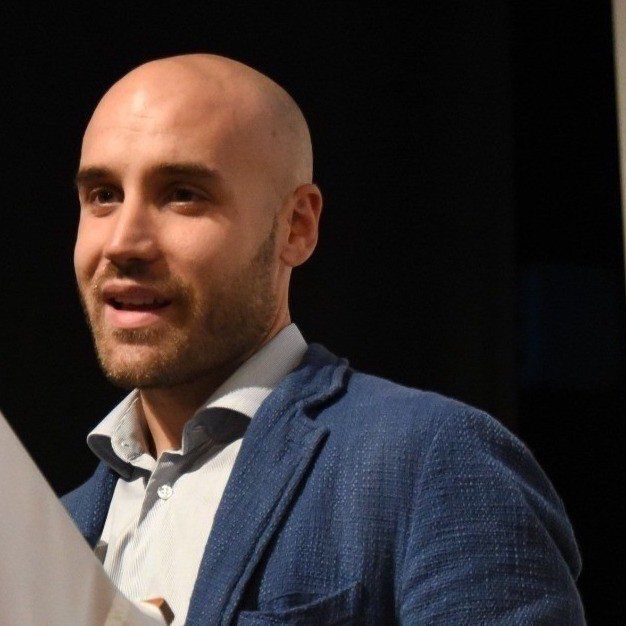
A conversation with Antonio Molinari: Mobility Manager of the Brescia campus of the Università Cattolica del Sacro Cuore.
Interview by Paolo Barbato with Antonio Molinari.
In the regulations, the Mobility Manager is conceived as a technical figure: they gather data on commuting patterns, draw up the plan, quantify the emissions avoided. Yet anyone who works inside companies knows that the most demanding part of the role begins afterwards, when those numbers have to turn into choices shared by hundreds of people who every morning decide how to get to work. Antonio Molinari observes the role from an uncommon vantage point: he is a researcher at the Alta Scuola per l’Ambiente of the Università Cattolica and, at the same time, Mobility Manager of the Brescia campus of the same university. A figure who, he is keen to point out, is not classified as technical-administrative staff, but arises from the meeting between research and the daily practice of someone who has to manage the movements of a community.
From this dual perspective, sustainable mobility stops being a chapter of transport engineering and becomes a matter of values, of language and of participation. In a talk at the Università Cattolica’s advanced training course in traffic psychology, in June 2026, Molinari brought into focus the skills that in his view really matter for those who hold the role, and the way in which the home-to-work commuting plan can become a tool for wellbeing rather than an obligation to close off by the end of the year. What follows is the thread of the conversation.
A pivotal figure, not just a technician
Paolo Barbato: When people describe the Mobility Manager, they almost always start from the technical requirements: the data, the origin-destination matrices, the emissions. You chose to start somewhere else. Why?
Antonio Molinari: Because the technical requirements are easily obtained from the ministerial references, and anyone can acquire them with a training course of a few hours. What makes the difference in the role are the skills that no decree describes. I see the Mobility Manager as a pivotal figure between three dimensions. There is the organization, because they are embedded in the company. There is the territory, because they deal with the Area Mobility Manager, who is often the head of the mobility office of the reference provincial capital. And there are people’s everyday behaviors, because mobility is not only about how I get to work, but about how I move around outside the work context too. Holding these three planes together is a job that has more to do with listening and facilitation than with calculation.
Then there is an aspect of the role that few talk about. It is an administrative obligation, but without a penalty: unlike the regulations on safety or the environment, whoever fails to appoint a Mobility Manager risks nothing. This changes everything, because it means that the figure rests on conviction, not on obligation. If the point of entry is not the cultural one, the economic one remains anyway: dealing with how employees get to work is an opportunity to cut costs and allocate resources better. But the real value comes when the company understands that it can have an impact on people’s quality of life.
The sustainability we know less about
Paolo Barbato: When you talk about sustainability, you insist a lot on the social dimension, more than on the environmental one. Is it a deliberate stance?
Antonio Molinari: In part it’s professional bias, I’ll admit it. But it’s above all the recognition that the biggest gap to close, even for us as academia, is precisely the social and cultural one. Economic sustainability we know, for historical reasons and reasons of socio-economic development, particularly in the post-industrial eras; environmental sustainability has by now entered common discourse. Social sustainability remains more elusive. It means, for example, the way we speak to people, the kind of language we use, the possibility for those who enter a place to feel welcomed and at ease. A sustainable site is not only one with solar panels, it is one that includes and allows people to feel good while they live in it.
That’s why I find it reductive to link sustainability only to the color green. When I ask people for their three words on sustainable mobility, alongside the environmental dimension, which is correct, words like accessible, safe, inclusive increasingly emerge. The etymological root of ecology, after all, tells precisely of the way I relate to the environment I inhabit. Translated into the work of a Mobility Manager, it means that a commuting plan is not assessed only by the tons of carbon dioxide avoided, but also by how many people it has put in a position to move around better.
The commuting plan as a tool for listening
Paolo Barbato: The home-to-work commuting plan is often experienced as a bureaucratic deadline. You read it differently.
Antonio Molinari: The plan is first of all a report of the questionnaire with which I gather information on employees’ commutes, but also on their propensity to change. And a questionnaire, if it is well built, can work as a tool for activating colleagues, almost like a focus group: it serves to understand people, not just to count them. From there arises the possibility of improving corporate welfare. The incentives a Mobility Manager works on range from subscriptions with public transport operators up to, for example, a gym or cinema membership, because sustainable mobility is not only how I move, it is a broader condition of wellbeing.
The point is that, if we stop at “I give you the pass to come to work and the rest doesn’t interest me”, we remain halfway. The Mobility Manager gathers information that allows the person to improve their own quality of life, especially in the workplace. And given that at work we spend most of our hours, having an impact on the quality of working life triggers changes in private life too. The hardest part, in all this, is preventing the gathering of needs from becoming a nuisance for employees. There is a whole job made of engagement, facilitation, listening and motivation, a job that has a lot in common with that of a pedagogist or other related professions, and that makes people feel part of a journey rather than the object of a survey.
The company as an actor in the territory
Paolo Barbato: You spoke of the social role of the enterprise, of the so-called stakeholder theory. What changes, concretely, when a company recognizes itself in this role?
Antonio Molinari: It changes the perimeter of what the Mobility Manager can do. The objectives are not only internal to the company. Seeing the enterprise as an actor in the territory may seem obvious, but sometimes entrepreneurs, and by the same token not all territories, recognize this social value. I’m not just talking about supporting local philanthropy projects, which are perfectly fine. Becoming a true stakeholder for the territory means, for example, helping to decongest urban areas, even when it isn’t an obligation.
I explain it with a concrete alternative. A company can say: what do I care if the employees all arrive by car, the important thing is that they clock in on time, in fact I demand that the municipality make it easier for me to get them in. Or it can turn to the municipality saying: I have employees who would like to come by bicycle, but they have to travel along a main road where cars zoom past at 80 km/h, why don’t we build a cycle-pedestrian path that serves them and everyone else? I know companies that have installed small bike-repair workshops outside their site, useful also to cyclists passing by. A manager who deals with sustainable mobility in a credible way gains a different weight in the dialogue with the administration, and that dialogue builds shared solutions.
Governing change
Paolo Barbato: If you had to sum up in a formula what this role demands, which one would you use?
Antonio Molinari: I would use the expression understanding, governing and designing change. A Mobility Manager’s skills are distributed across four planes. There are the technical ones, that is knowing how to build the matrices and having a minimal knowledge of emissions and safety. There are the organizational ones, managing a budget that on these matters is almost always small and negotiating, especially in the relationship with the municipality. There are the communicative ones, which I consider perhaps the most important of all. And there are the pedagogical and ethical ones, which serve to accompany changes in habits.
Governing and designing change means exactly this: not letting things change randomly, but fostering participation and taking care of accessibility, making sure that everyone feels part of the process. It is slow and demanding work. But it is the only way for choices to hold over time. Let’s not forget that the issue of inequalities, in mobility too, is enormous: there is no longer a single poverty, there are many, and a person we welcome starting from one inequality often carries others with them. Holding all of this together is the heart of the role.
An example from the territory: Brescia
Paolo Barbato: You work in Brescia, a city that in recent years has changed its face on the mobility front. What has observing it up close taught you?
Antonio Molinari: Brescia has a history of courageous choices on mobility. The metro, inaugurated in 2013, contributed considerably to making the city more livable, and the picture will keep changing: by 2030 the tram will also arrive, bringing green islands with it. There were many skeptics at the start, and yet that mobility changed the look of the city. I was struck to discover how much a means like the metro, which mainly serves to take buses off the surface, can affect a city’s very identity, to the point that Brescia chose as its slogan the idea of a European city.
It is a different level from the corporate one, of course, but the lesson is transferable. Mobility does not just move people, it reorganizes places and the way we live them. For those who do my job within an organization, the same principle applies on a smaller scale: every choice about employees’ commutes redraws a piece of daily life.
What to take home, for those who do this job
Paolo Barbato: Let’s close with a message for those who hold the role of Mobility Manager in a company. What makes sense to keep in mind?
Antonio Molinari: That technical competence is the foundation, but it is not what makes the difference. The difference is made by listening and the ability to build participation, because without participation you easily slip into manipulation: I force people, and I get people who do things without understanding them. The minimum acceptable level is to inform, because simply making people aware already avoids a lot of resistance. Then you can consult, seek reconciliation, and finally build concrete partnerships. These are paths founded on some principles: fairness between the parties and the truthfulness of the data. It is no coincidence that I insist on data: faced with divisive topics like sustainable mobility, having true, reliable and comparable references is what makes dialogue possible. The drafting of the commuting plan too, which is a task of the Mobility Manager, should adhere to these principles, because they are the basis of participation.
My underlying orientation, for me, remains the common good: a need of mine to move must not harm that of another. I care that a person who moves because in their area they cannot find work can be welcomed and included elsewhere. Only when mobility holds together individual needs and those of the community can we truly speak of sustainable mobility. To use an image, the Mobility Manager resembles someone who follows the wind there is and steers the ship accordingly.
Antonio Molinari is a research fellow in General and Social Pedagogy at ASA, Alta Scuola per l’Ambiente of the Università Cattolica del Sacro Cuore, with a focus on environmental issues. He is Mobility Manager of the university’s Brescia campus, in a function that combines research and practical activity. In 2024 he published the contribution Pedagogical Design for Sustainable Cities: the Role of the Mobility Manager, in Mazzoli, S. (ed.), Fare comunità nella transizione ecologica. Tracce di speranza, Pensa MultiMedia, Lecce 2024: 45-58 https://hdl.handle.net/10807/321740, devoted to the educational role of the figure in the governance of urban mobility.
Antonio Molinari is a research fellow in General and Social Pedagogy at ASA, the Graduate School for the Environment of the Università Cattolica del Sacro Cuore, with a focus on environmental issues. He is Mobility Manager of the university's Brescia campus, in a role that combines research and practical activity. In 2024 he published the contribution Pedagogical design for sustainable cities: the role of the mobility manager, in Mazzoli, S. (ed.), Fare comunità nella transizione ecologica. Tracce di speranza, Pensa MultiMedia, Lecce 2024: 45-58, dedicated to the educational role of the figure in the governance of urban mobility.