
Demand Responsive Transit, low-density areas and the role of local public transport: a conversation with Gabriele Grea
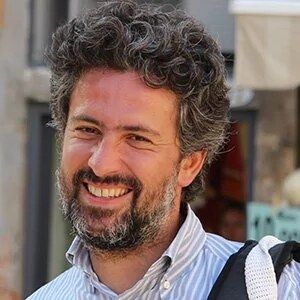
A conversation between Paolo Barbato and Gabriele Grea.
Anyone living in a village of three thousand people in the Apennines knows that the bus comes twice a day, at seven in the morning and at five in the afternoon. If that run is cancelled, everything falls apart: the medical appointment, the job interview, the shopping at the supermarket in the main town. In Italy’s low-density areas, local public transport (TPL) has been living in this condition of bare adequacy for decades.
The phenomenon is not marginal. According to the Strategia Nazionale Aree Interne, Italy’s inner areas cover around sixty per cent of the national territory and are home to more than thirteen million people. When the supply of services thins out, they are the first to pay the price of inefficiency. And behind that price there is real mobility demand, made up of commuting, access to healthcare services, social life.
One of the technical answers to this demand is Demand Responsive Transit (DRT), known in Italian as trasporto a chiamata or trasporto flessibile. It is a public transport service that, unlike traditional lines, has neither fixed timetables nor predefined routes: the vehicle is activated on the basis of user requests, collected through an app, by phone or via a web platform, and recalculates its itinerary to serve the bookings within a given time window. In low-density areas it is the category of service that the European debate points to as the best suited to demand that is dispersed in time and space.
To think through how to rethink local public transport in these territories, I met Gabriele Grea, lecturer in economics and management of urban mobility and smart cities, intelligent and sustainable mobility at Università Bocconi in Milan (Master MSM) and at TU Berlin (Sustainable Mobility Management MBA). Grea has worked for years on demand-responsive services and local public transport planning, with a particular focus on areas where demand is too dispersed to justify fixed lines.
Local public transport as a universal service: an aspiration never realised
Paolo Barbato: Local public transport is often described as a universal service. Yet the experience of people living in inner areas tells a very different story. Where should we start from to rethink the system?
Gabriele Grea: Local public transport, by its very nature, is not comparable to the other so-called “universal services”, but is rather an “essential” public service. Today, traditional networks show their main limits in responding to needs that are constantly evolving. Trips that are less systematic and more complex, an ageing population, settlement dynamics that lead peripheral and peri-urban areas to grow but not necessarily to evolve, all create the need to design new systems.
Demand-responsive services, or Demand Responsive Transit, are often read in our institutional context as a limited instrument, or as a way of cutting the “dead branches” of road transport and replacing them with something cheaper but not necessarily more effective. That is a reductive reading. There is no single model of flexible transport: the operational configuration changes according to the territory, the objectives, the type and characteristics of demand (including users’ willingness to pay) and the production factors available. The vehicle first of all, but also the availability of drivers, especially in peripheral and remote areas, which is a fundamental aspect.
Local public transport is not comparable to a ‘universal’ public service. It is rather an “essential” one, but today traditional networks are showing their limits.
The DREAM_PACE project: what we learned
Paolo Barbato: You have just concluded the Interreg project DREAM_PACE, dedicated precisely to integrating DRT into local public transport networks. What did you find?
Gabriele Grea: DREAM_PACE is an Interreg Central Europe project focused on the integration of Demand Responsive Transit services into functional areas, within local public transport schemes and networks. It involved partners in five European countries and six functional areas, with different densities and different problems. From the very start of the project we set ourselves the problem of understanding which elements of innovation are necessary for a genuine evolution of the system, from the technological, operational, governance and planning points of view.
On the technological side a clear and shared picture emerges: technology is no longer the problem. The problem lies elsewhere. It lies, for example, in coordination, in integration and in reaching a critical mass: the condition needed for DRT services to be sustainable in a territory over time. Today we have, on the one hand, demand-responsive services framed within service contracts that carry certain rigidities and are difficult to interpret. On the other hand, services that emerge as bottom-up ways of meeting local needs, but with the problem of inconsistency over time: there is funding, there is a need, a pilot is run and it produces a service that is not economically sustainable in the long term. When the pilot ends, the service stops existing too.
The critical mass that makes economic sustainability possible, in this logic, has to be sought on several levels. One is planning that breaks down silos. For example: dedicated flexible transport schemes (e.g. non-emergency medical transport, school transport, tourist transport) exist, they cost money, they are funded. And the capacity made available is often underused. What is missing are the synergies with a system that also responds to other mobility needs, a systemic vision.
The other level is horizontal coordination. A major problem with regional competence is that flexible mobility models are very different from one another, they are often an expression of the territory (which is a good thing) but they lack coordination. A catalogue of codified, “ready-to-use” models would help administrations and local authorities plan and optimise the development of services across their territory. Provided, however, that they are designed in a data-driven logic, around users’ real needs.
Technology is no longer the problem. The problem is critical mass: the condition for DRT services to be sustainable in a territory over time.
Understanding demand: the role of mobility management
Paolo Barbato: There seems to be more clarity on the supply side than on the demand side. To design a DRT service you need to know who is travelling, when, and from where to where. How do you get to that data?
Gabriele Grea: Mobility management today is an increasingly central aspect. Even with the weaknesses of regulation that offers little incentive, it is above all a framework for understanding the phenomenon that is potentially very dynamic. Today we do not just draw up home-to-work commuting plans: we can monitor how the habits of workers and citizens evolve, and do so in a participatory way.
If we managed to combine this with planning of certain dedicated services that is genuinely data-driven, and embedded flexibly in resource management and in service contracts, the impact would be far more promising than what we obtain today through potential adjustments or additions to a rigid system.
If we managed to combine mobility management with planning of dedicated services that is genuinely data-driven, the impact would be far more promising.
New actors and stakeholder networks
Paolo Barbato: One interesting direction concerns the role of the new actors entering the mobility market. How is this new geometry organised?
Gabriele Grea: One interesting hypothesis, in my view, is to explore the synergies between the energy sector (distributed and renewable) and that of new mobility models. In a context where local communities are mobilising to improve the efficiency and sustainability of their consumption, and where the electrification of mobility is a path already under way, the economic actors at play in both the energy and transport fields can collaborate and support local communities in co-design activities and in defining mobility services, in a synergic way and geared to generating tangible benefits in the territories where they operate.
The new frontier for this kind of experimentation is therefore made of interactions between different stakeholders, both in creating new solutions and in defining regulatory frameworks that make new forms of transport possible, including where existing regulation does not allow them or does not fully allow them. I imagine public transport operators holding concessions that not only invest in or offer forms of sharing, but that organise shared and participatory modes of transport in those territories where not even demand responsive transit finds a sustainable dimension: because when critical mass is inevitably low and the level of service quality cannot be satisfactory, we are simply throwing resources away.
I am thinking of municipalities, even very small ones, that have invested in decarbonisation and find themselves equipped with an electric vehicle (usually a van or a minivan) and do not know how to use it. Or of the tens of thousands of school buses that work only twice a day (taking children to school and bringing them back) and sit idle in the depot for the rest of the time.
What we take away
The conversation with Gabriele Grea brings into focus three operational observations worth setting down.
First: in low-density areas classic local public transport is not the answer. Demand Responsive Transit is not a downgraded replacement for traditional public transport, it is a different category of services requiring its own technology, data, regulation and operating models. Framing it as a fallback leads to fragile solutions.
Second: user critical mass is today the key element for the success of a DRT service (no longer technology). It is built by breaking down planning silos and introducing horizontal coordination that pools models that are currently too different from one region to the next. The frontier is the creation of interactions between different stakeholders: administrations, local public transport concession holders, energy companies, employers.
Third: mobility management can become the main means of dynamically understanding mobility that DRT requires. Combining the ability to monitor the habits of workers and citizens in a participatory way with data-driven service planning, embedded flexibly in service contracts, is the way to overcome the rigidity of the current system.
The picture that emerges from Grea’s research confirms a direction: the future of public transport in low-density areas will be decided by the ability to coordinate different actors around a shared and up-to-date image of the territory’s real mobility. Technology and regulation are merely the means to identify and enable the critical masses that make a DRT service genuinely sustainable and effective.
About Gabriele Grea
Lecturer in economics and management of urban mobility and smart cities, intelligent and sustainable mobility at Università Bocconi in Milan (Master MSM) and at TU Berlin (Sustainable Mobility Management MBA). He works on local public transport planning, flexible mobility services (Demand Responsive Transit) and the governance of functional areas. He took part in the Interreg Central Europe project DREAM PACE, on the integration of DRT into European local public transport networks.
Lecturer in urban mobility economics and management and smart city, intelligent and sustainable mobility at Bocconi University in Milan (MSM Master) and at TU Berlin (Sustainable Mobility Management MBA). He works on local public transport planning, flexible mobility services (Demand Responsive Transit) and functional area governance. He took part in the Interreg Central Europe project DREAM PACE, on integrating DRT into European local public transport networks.