
Does an insurer of people also look at how colleagues get to the office?
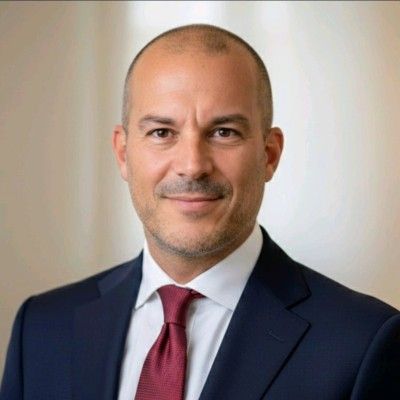

Interview by Paolo Barbato with Manuel Marchesi.
The starting point
Paolo Barbato: CNP Assicura is part of an international group, and employee mobility is only one of your responsibilities, alongside facilities, health and safety. Even so, mobility has gained real attention and space at your office. How did it all begin?
Manuel Marchesi: Ever since I’ve had the opportunity to look after Facility Management and Health and Safety, I’ve realised how important the commute is in our colleagues’ day: it has a direct impact on their wellbeing, on their safety and also on the company’s sustainability. Mobility therefore came into scope almost naturally. The initial goal was to shift the focus away from pure regulatory compliance and towards seeing it as a tool to improve quality of life, safety and sense of belonging.
As a fairly small organisation, we don’t have a team dedicated exclusively to mobility. But this can also be an advantage: decisions are quicker and dialogue with people is direct. We started by listening to our colleagues’ needs, analysing how they travel and looking for practical solutions that could improve their daily experience without requiring significant investment.
The commuting survey is the main tool for understanding the real needs of the company’s workforce. It’s important to ask the right questions and analyse the results in detail, because the needs often emerge very clearly.
A concrete example concerns cycling. The surveys showed growing demand from colleagues who cycle to the office. Our building already had dedicated changing rooms, but there was no suitable place to leave a bike safely. So we identified an area in the underground garage and installed enough racks to meet internal demand. Despite limited space, we managed to make the most of the available area, offering employees covered, protected parking that is much safer than leaving a bike on the street.
This shows that big investments often aren’t needed: when you start from a real, well-identified need, even relatively simple measures can deliver immediate and lasting benefits.
The relationship with the group
Paolo Barbato: CNP Assicura is part of CNP Assurances, France’s leading insurer of people and second in life insurance, controlled by the public group La Banque Postale and recognised among the world leaders in the sector for its commitments on climate and biodiversity. With a parent company of this weight, it’s natural to imagine that the push on mobility comes from the top. My impression, however, is that in Milan you’re pushing from the bottom up. What role does the group really play in your local momentum, does it deal with the topic in a structured way, and in France is employee commuting approached in the same way or differently?
Manuel Marchesi: Being part of an international group like CNP Assurances means we can count on a strong sensitivity to ESG, sustainability and social responsibility. This certainly creates a favourable context and a corporate culture that encourages initiatives aimed at positive impact, in line with our raison d’être.
That said, the initiatives we’ve developed in Milan grew out of local needs and concrete observations. The ways people travel, the infrastructure and the habits of workers in our city are different from what you might find elsewhere.
So the group is the source of inspiration and the reference framework of values, while the solutions are designed mainly on the ground, taking into account the specific needs of our colleagues. It’s a combination of global vision and local action.
The relationship with the local area
Paolo Barbato: Working with a local administration or with local stakeholders seems to be territory reserved for large employers. You’ve shown that a smaller organisation can also achieve something concrete for employee mobility by reaching outwards. What have you learned about how and when it makes sense to knock on the public sector’s door, and what makes the difference between a request that goes nowhere and one that gets an answer?
Manuel Marchesi: One of the most important lessons is that company size matters less than you might think. Public administrations are naturally more receptive when a request is backed by data, a real need and a concrete proposal.
In our case, one success story was the creation of reserved parking spaces for scooters and motorcycles near our office. This need, too, had emerged clearly from the commuting survey, which showed a growing number of colleagues using two-wheelers to get to the office.
So we opened a dialogue with the Mobility Department of the City of Milan. The process had several stages: from the first contact to proposing the areas to be converted, through managing the authorisation process and then building the bays. Throughout the process we kept in constant contact with the administration, providing information and following the progress of the work.
The end result was positive and brought a concrete benefit to our colleagues. This experience teaches that you shouldn’t be afraid of engaging with the public sector. What makes the difference is coming forward with clear requests, backed by evidence and aimed at solving a real problem. When you show that the benefit isn’t just for the company but also helps improve mobility in the area, your chances of being heard increase significantly.
Engaging people without spending
Paolo Barbato: Although awareness campaigns require investment, the budget for mobility is almost always limited. You’ve built initiatives by working with operators and external providers, so that the partner itself had an interest in taking part. How do you set up this kind of collaboration so that it lasts, and what really shifts people’s behaviour beyond the enthusiasm of the launch?
Manuel Marchesi: Budget isn’t always the main factor for success. Very often the most effective initiatives come from listening, from understanding needs and from the ability to make smart use of resources that are already available.
The bike racks and the scooter spaces are two concrete examples of actions that came directly from the results of the commuting survey. In both cases we didn’t start from a ready-made solution, but from a need expressed by our colleagues.
Another particularly interesting initiative was an information campaign on the shared mobility options available in Milan. Analysing the data we had collected, we realised that many employees knew little or nothing about the opportunities offered by bike sharing, scooter sharing, car sharing and pooling services.
So we decided to use a tool we already had, at no extra cost, our company intranet, and created a series of weekly “information pills”. Each week we explored a different way of getting around, explaining how it works, its economic advantages, its practicality and its environmental benefits.
The goal wasn’t to promote a specific operator, but to raise awareness of the alternatives available near our office. People often don’t change their habits because they lack the information they need to weigh up different options. In this case we tried to close exactly that information gap.
I believe the real success factor is this: making people feel a concrete advantage. Saving time, convenience, flexibility and safety matter far more than any communication campaign. Communication works when it supports a real need and helps people find practical solutions.
Commuting as a risk, not just as welfare
Paolo Barbato: Yours is a company that protects people from the risks of everyday life, and commuting is one of those risks, currently on the rise in Italy with more than 101,000 commuting accidents in 2024 (INAIL data). Does having this sensitivity to risk in-house change the way you look at your colleagues’ mobility? How does it translate into practice when you plan the journeys of the people who work with you?
Manuel Marchesi: Working at an insurance company inevitably gives you a particular sensitivity to risk. Daily travel is one of the moments when people are most exposed to unwanted events, and commuting accidents remain a risk to be taken into account.
That’s why I see mobility not only as a matter of welfare or environmental sustainability, but also as a prevention tool.
When we promote alternative modes of transport, when we build infrastructure for people who cycle or when we work with the local area to improve access to the office, we’re also helping to make our colleagues’ journeys safer.
Mobility has a direct effect on people’s stress, quality of life and safety. That’s why we try to approach it in an integrated way, considering wellbeing, sustainability and risk management together.
The lesson for those with few resources
Paolo Barbato: Many Mobility Managers, like you, combine mobility with many other responsibilities and work with small budgets and no dedicated team. How do you manage to make room for it among everything else? What advice would you give a colleague?
Manuel Marchesi: I think many Mobility Managers find themselves in this situation. My team, too, handles Mobility, Facility Management and Health and Safety at the same time.
The key, in my view, is not to treat mobility as an activity separate from everything else. How people travel is directly connected with safety, organisational wellbeing, sustainability and the management of company spaces. When you manage to bring these aspects together, mobility stops being an add-on and becomes part of the organisation’s ordinary management.
The advice I’d give a colleague is to always start by listening. Before looking for solutions, you have to understand the real needs. The commuting survey, if well designed and carefully analysed, is an extremely valuable tool.
The initiatives that delivered the best results in our experience, from the bike racks to the scooter parking and the information campaign on shared mobility, all came from analysing the needs expressed by employees.
Another fundamental aspect is time management. Mobility Managers often have to juggle this role with many other responsibilities, so it becomes essential to be able to rely on tools that simplify collecting, analysing and processing data. Today digital progress helps us, and having a platform like Wiseair has allowed us to work much more efficiently, quickly turning the data we collect into useful information for making decisions and setting priorities. This makes it possible to achieve high-quality results even where time and resources are limited.
Finally, I believe people always make the difference. Over these 2 years I’ve had the chance to exchange ideas with skilled professionals from companies like yours, whose expertise, availability and passion for sustainable mobility have been a constant source of inspiration. Sharing experiences, ideas and good practices helps you face the challenges every Mobility Manager meets daily with greater enthusiasm and awareness.
You don’t need large financial resources. What you need above all is consistency, the ability to build relationships and the will to turn the data you collect into concrete action. Sustainable mobility, at least in my experience, is first and foremost a matter of listening. When you truly understand people’s needs, solutions become much easier to identify and put into practice.
Mobility Manager at CNP Assicura, the Italian company of the CNP Assurances group, where his team also oversees Facility Management and Health and Safety. At the Milan office he has turned the commuting survey into concrete measures: covered bike parking, scooter bays obtained with the City of Milan and an information campaign on sharing mobility.