
Mobility at Fondazione Bruno Kessler: how to turn a problem (a construction site) into an opportunity
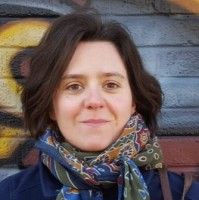

A conversation with Chiara Morstabilini, Mobility Manager of Fondazione Bruno Kessler
A research institute of the Autonomous Province of Trento, Fondazione Bruno Kessler (FBK) has over 1,000 staff, including support staff and researchers, spread across six campuses with a total of 13 buildings. Its main site stands in the hills of Trento, next to the science campus of the city’s University. Since 2023 the Foundation has drawn up a home-to-work travel plan (PSCL) and has already launched several initiatives in support of sustainable mobility, including two covered bike parks, bike racks, showers and discounts on urban public transport passes.
Construction of a new building at the Foundation’s Povo campus created a mobility problem: the closure of a car park meant the loss of around 40 of the 300 spaces originally available. Since parking in the public areas of the neighbouring village is only allowed for limited periods with a parking disc, the only spaces usable for the whole working day were the staffed ones at the Foundation’s entrance. To address the situation, starting in July FBK launched an innovative mobility project. This made it possible to roll out a wide-ranging set of measures, going well beyond handling the initial emergency, such as the introduction of a refund on public transport passes linked to car entries, a year-long trial of e-bikes for travel between sites, and the launch of a carpooling service and a bike workshop shared with the University of Trento. At the same time, the Province of Trento cut public transport fares, offering an unlimited travel pass on the provincial network at 20 euros for the summer of 2026 and at 25 euros for the months from September to December.
The role of Chiara Morstabilini, FBK’s mobility manager, took on new relevance because of an unexpected factor: the opening of a construction site that made it necessary to rethink mobility in terms of parking and access. The innovative project designed to manage this problem was thus turned into an opportunity, making it possible to introduce structural, lasting solutions designed not only to replace the lost parking spaces, but to encourage a real modal shift towards increasingly sustainable mobility.
In this context, local collaboration proved decisive, confirming the effectiveness of the model adopted in Trentino. The Foundation worked in synergy both with the University, whose experience was cited in 2025 in the manifesto of the Territorial Coalitions of Mobility Managers, and with the Municipality of Trento, drawing on the support of the office led by Area Mobility Manager Marco Demattè, who featured in one of our recent interviews.
Forty fewer spaces
Paolo Barbato: A construction site, a closed road, a new limited traffic zone are external factors that the Mobility Manager does not control, but that can change their role overnight. Chiara, where did the project you have been running since July come from?
Chiara Morstabilini: To make room for the base of a crane needed to build a new building, we had to close the 40-space parking area at our main site. Losing those forty spaces out of 300 in total immediately caused the first difficulties. As we are in an isolated hillside location, there are almost no alternatives nearby: the parking areas in the nearby village are all time-limited with a parking disc, leaving the spaces at our entrance gate as the only all-day option. So we took this problem, which could also have caused significant internal discontent, as the starting point for an innovative project that allowed us to mobilise new resources, also earmarked for other mobility actions.
Paolo Barbato: Since then, has the way the organisation looks at your role changed?
Chiara Morstabilini: Unlike many mobility managers who report to health and safety or human resources, my position in the Estate Management service is an exception. This placement has fostered close collaboration both with the University and with the various internal units. To offer benefits and design effective measures, it is essential to rely on organisational data and suitably aggregated mobility indicators. Collaboration between FBK’s various organisational units has allowed us to better understand travel needs and identify the most suitable solutions. At the same time, to communicate the initiatives effectively, we work closely with internal communications, promoting videos, images and content shown, for example, on the Foundation’s internal screen system.
Paolo Barbato: What was the first measure?
Chiara Morstabilini: As a first measure, we introduced a refund on the public transport pass that adds to the discount already in place, linking it to the number of car entries. The contribution increases as motorised entries decrease and is paid as a lump sum in the July payslip. This year eligibility was extended to all employees with an annual pass, including extra-urban passes. Since those using the urban network already get a 30% discount at the ticket office, the maximum refund doubles for extra-urban passes: up to 60 euros a year for urban and up to 120 euros for extra-urban. Extra-urban users usually come from Verona and spend around 450 euros a year on a Trenitalia pass.
Paolo Barbato: How do you know who arrives by car?
Chiara Morstabilini: Car entries are recorded through the badge or transponder swipes at the Foundation’s vehicle barriers. For the purposes of the initiative, only whether there was a vehicle entry on a given day is counted, regardless of the site and the number of passages. This recording is carried out only on a voluntary basis for those who choose to join the refund scheme, with organisational and technical measures to protect colleagues’ privacy in the analyses (for example, by associating the total number of entries with a code), and for the sole purpose of paying the planned benefits. It is worth repeating that, for those who choose to travel by car, the company parking area is almost the only practical solution.
E-bikes between one site and another
Paolo Barbato: The new project also includes the use of electric bikes. What are they for?
Chiara Morstabilini: Our sites are spread across the city. The aim is to let people park their vehicle at the campuses with the most free spaces, and then make inter-site trips by e-bike. To start with we will use an agreement with a supplier, reserving the option to buy the bikes depending on the results. The pilot project will last a year starting on 1 January, split into two six-month blocks as set out by the supplier. The initial push came from our head of human resources, who reconsidered whether it made sense to drive four kilometres to get to the office: today he travels by bike, and his first-hand example has proved very effective in raising awareness among all staff.
Paolo Barbato: Was finding the supplier easy?
Chiara Morstabilini: Far from it. As we are in a strongly tourism-oriented area, the many small local rental companies did not offer adequate insurance cover. Our third-party liability insurance, while covering the use of the bikes, does not cover the risk of theft, a critical factor given that, in standard rental, the cost of a stolen bike falls entirely on the customer. For this reason we directly manage every aspect relating to suppliers, contracts and infrastructure set-up, including building covered bays dedicated to the e-bikes.
Carpooling and other networked services
Paolo Barbato: Did you launch carpooling on your own?
Chiara Morstabilini: To promote shared mobility, we signed a strategic partnership with the University of Trento, creating an integrated hub between our adjacent facilities. The community involved includes over 1,000 FBK users and the University of Trento, which has around 17,000 students and doctoral candidates, as well as 2,000 lecturers, researchers, research fellows and technical-administrative staff. Together with UniTrento’s mobility manager, engineer Mirella Ponte, we coordinate activities to enable trip sharing through a single company platform. The official launch of the cluster, alongside an inter-company competition, was scheduled for October; while waiting to share their first trips, several colleagues have already installed and tested the app.
This software solution was adopted thanks to the infrastructure promoted by the municipal administration. The Municipality of Trento ran a call to select carpooling app providers willing to guarantee basic use free of charge to organisations belonging to the city’s mobility management network, together with discounts on advanced options. As no specific hub was planned for the hillside area, we asked for our facility to be included in the urban hub, which already brings together other local players such as the University of Trento, ITAS Assicurazioni and MUSE.
Paolo Barbato: Do you support cycling in other ways too?
Chiara Morstabilini: In collaboration with the nearby university campus, we have a shared bike workshop: the University provides the space and the equipment, while we provide the staff who open it and help with carrying and lifting the bikes.
We also promote the bike registration service in partnership with the Municipality. The municipal administration provides free of charge a kit made up of a label and a registered identification code; once at least ten requests have been collected, a staff member comes to our site by appointment to carry out the registration. This measure is aimed solely at protecting the value of the bike, with no effect on road safety.

The questionnaire
Paolo Barbato: The PSCL questionnaire has been open since 17 September. Can we say that every response is a mandate for the Mobility Manager, a bit like the quorum in an election?
Chiara Morstabilini: There is no need to motivate those who already care about mobility issues and fill in the questionnaire out of their own interest. The real challenge is explaining to the others that it is not a mere bureaucratic formality, but a tool that is useful to them. To get this value across, we draw attention to concrete results: operational decisions stem from the feedback we receive. A tangible example is the new bus shelter installed in via alla Cascata thanks to the collaboration with the Municipality. We follow each project in the field, setting priorities on a numerical basis, but everyone’s participation is essential to identify where action is really needed.
At present the average response rate is around 30% and the goal is to increase it. To achieve this, we agreed on an integrated internal communication strategy: emails sent from a dedicated address, leaflets on the noticeboards and a presentation in FBK Live, the company newsletter. However, direct contact remains the most effective approach: going round the offices with leaflets in hand makes it possible to explain in person what has been achieved with the responses collected, such as the addition of two extra bus runs. The deadline for completing it was 30 October, ahead of the publication of the plan by 31 December.
Paolo Barbato: What does the questionnaire tell you about those who arrive by car?
Chiara Morstabilini: The data show that half of those who travel by car do not intend to give it up. Although our site is served by three bus lines, one of them a main line, the car remains an ingrained habit for many. Our strategy is not to force a switch to public transport, but to show the economic comparison transparently: highlighting the monthly cost of travelling alone compared with the savings from sharing the trip with another passenger. A practical approach that does not require people to overturn their habits.
Paolo Barbato: You were also asked for spaces reserved for electric cars.
Chiara Morstabilini: That’s right, and for now the request has not been granted. An electric vehicle carrying a single person neither reduces road congestion nor addresses our problem. Electric cars are already part of our company fleet: in line with the sustainability plan, we are converting the fleet towards at least mild hybrid solutions, while for urban trips the transition to electric is already under way.
Paolo Barbato: On 17 September you organised a morning with the University. Why that day?
Chiara Morstabilini: The “Al lavoro in bicicletta” initiative, organised by the Municipality of Trento on 17 September as part of European Mobility Week, was an opportunity to monitor cyclist flows. Together with volunteers we staffed the entrance gates to monitor arrivals, welcoming those who came on two wheels with an invitation to coffee at 10, as well as encouraging people to fill in the questionnaire and sharing the first data. To assess how results are progressing, the most meaningful benchmark remains the comparison with the previous year, given both the increase in staff since 2023 and the recent merger of some sites.
Against around 40 formal registrations, actual attendance exceeded expectations, reaching about 70 people, a higher turnout than other similar initiatives. The event attracted not only those who usually cycle, but also employees who habitually drive, joined by colleagues from the university connected via streaming. The event was an important networking opportunity across services and institutions, and also marked the Estate Management service’s first public appearance within the FBK community.

The apps available to staff, carpooling and benefits
Paolo Barbato: What apps are available, and how do they relate to the pass refund?
Chiara Morstabilini: We use a carpooling app that lets users who choose to join record and earn rewards for different ways of travelling, both shared and sustainable (on foot, by bike or by bus). At the start, the user indicates the means of transport used and whether they are willing to offer a lift. The system then assigns a score based on the type of transport and the level of trip sharing, feeding into a team challenge currently under way.
As this is a trial year, use of the app is decoupled from the refund procedure. To access the financial contribution, participants submit documentation of their pass so that its validity can be checked. The amount is calculated on the basis of total car park entries recorded between 1 July 2026 and 30 June 2027, according to a grid defined and published before the start of the programme. To date 84 applications have been accepted, split between 78 urban network passes and 6 extra-urban ones.
Paolo Barbato: Is your carpooling also open to university students?
Chiara Morstabilini: Yes, the Foundation’s employees can share carpooling trips with anyone heading to the University.
Chiara Morstabilini is Mobility Manager of Fondazione Bruno Kessler (FBK), a research institute of the Autonomous Province of Trento with more than 1,000 staff across six sites. She works in the Estate Management service and coordinates the Foundation's home-to-work travel plan, in collaboration with the University of Trento and the City of Trento.