
FIAB Bike Friendly Company Certification: the bicycle at the heart of mobility management

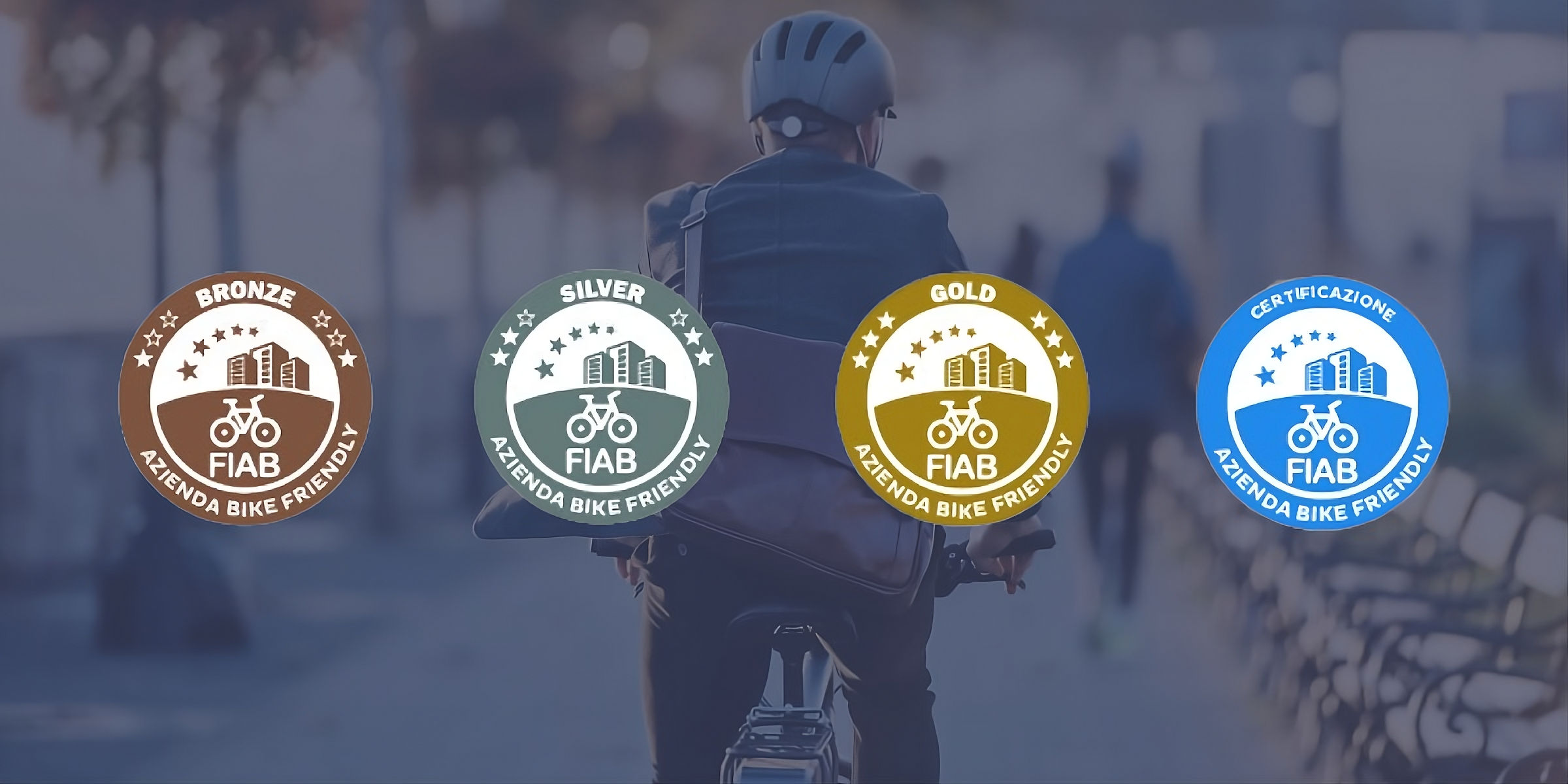
In an increasingly sustainability-focused landscape that prioritizes environmental sustainability and people’s well-being, the “Bike Friendly Company” certification, promoted in Italy by FIAB (Italian Federation for the Environment and Bicycle) represents a concrete tool for companies eager to welcome the bicycle among their daily transportation options.
This initiative officially recognizes workplaces that actively promote bicycle use, improving the work environment and the well-being of their employees.
Who is FIAB?
With over 30 years of experience and 20,000 members, FIAB is the largest cycling advocacy association in Italy. Recognized by the Ministry of the Environment, its mission is to spread the daily use of bicycles to protect the environment and combat the climate crisis. As a partner of the European consortium, FIAB is the exclusive Italian representative for the CFE (Cycle Friendly Employer Certification) protocol.
Certification Levels
The certification, valid for 3 years, is structured on different merit levels, based on the quality and commitment of cycling policies adopted by the company:
-
Blue Label: Reserved for companies with fewer than 10 employees that implement bicycle-friendly measures.
-
Bronze: For companies that make minimal investments to promote bike to work.
-
Silver: For those who develop coherent policies and strong support for bicycle use.
-
Gold: The highest recognition, dedicated to companies that show creativity, innovation, and high quality in their policies.
How to Obtain It: Essential Requirements
The certification process evaluates 6 functional areas and 55 specific indicators, but is based on two essential pillars that the company must guarantee:
-
Appointment of Mobility/Bike Manager: A key figure who collects data on employee mobility, manages communication plans, and oversees objectives related to cycling.
-
Parking and Accessibility: The company must have a structured parking area or guarantee easy and safe access for bicycles to company premises.
Why Become a Bike Friendly Company?
The benefits go far beyond simple formal recognition. Adopting a bike to work approach means promoting both sustainability and employees’ physical well-being. Furthermore, the procedures required for certification integrate perfectly with:
-
ISO 9001 certification and Social Balance reporting.
-
UNI EN ISO 14064 standard (Carbon Footprint) and ISO 26000.
-
The Sustainable Development Goals (SDGs) of the UN 2030 Agenda, including health, clean energy, and combating climate change.
A Growing Movement
In Europe, there are already over 1,450 certified companies. Italy is also doing its part with notable organizations such as SACBO (Milan Bergamo Airport), Bologna Airport, the central Rome, Rome Ostiense, and Mestre offices of Poste Italiane, the European agencies ETF (European Training Foundation) in Turin and EFSA (European Food Safety Authority) in Parma, and many others.
Today, approximately 14,300 people in Italy work for companies that support and encourage them to use bicycles for daily commutes. The “Bike Friendly Company” certification doesn’t just create culture and well-being, but is a concrete tool for acting on sustainability.
How to Obtain Certification: Requirements and the 6 Functional Areas
The certification process is rigorous and evaluates the company on 55 specific indicators divided into 6 Functional Areas (FA). However, there are two essential prerequisites without which certification is not possible:
-
Appointment of Mobility/Bike Manager: A figure who manages mobility, collects data, and coordinates communication plans.
-
Accessibility and Parking: The guarantee that bicycles can access company premises or park in a dedicated area.
Once the basic requirements are met, the company builds its score through the six intervention areas. Once the basic requirements are met, the company builds its score through the six intervention areas. It’s important to remember that there is no single model: each company finds its own solution to meet certification criteria, adapting measures to its own reality, size, and organizational culture.
FA1 - Information and Communication
The goal is to create a company culture that actively supports bicycle use. Among the concrete actions is participation in events such as European Mobility Week or Bike to Work Day. Essential are information kits for new hires — with bike lane maps and safe routes — and the organization of “company bike buses”, groups of colleagues who cycle together. Initiatives such as breakfasts for cyclists, recognition of the “cyclist of the week”, and the use of bulletin boards to show initiatives or suggestions for using the bike in all seasons make daily bike use familiar.
FA2 - Coordination and Organization
This area requires a formal strategy. A serious company develops a Home-Work Travel Plan (PSCL) to analyze habits and define measurable objectives. The dedicated budget can finance agreements and facilitated purchases. The most innovative companies integrate bicycles (including cargo bikes and trailers) into internal logistics and deliveries. Also essential is the insurance aspect (such as CIAB registration for employee liability insurance) and collaboration with the Municipality to improve local infrastructure.
FA3 - Services
Offering practical support is essential to consolidate habits. A “company bike workshop” with basic tools and periodic visits from a mechanic for free check-ups are highly appreciated services. Creating a company bike fleet (including e-bikes) allows work or home-work trips even for those who don’t own their own vehicle. The offering is completed with demonstration days to test e-bikes, agreements with local shops, and access to bike-sharing.
FA4 - Facility Equipment
Physical infrastructure must guarantee comfort and safety. Bike racks must be professional (frame-wheel locking), covered, lit, and positioned less than 100 meters from the entrance. For cyclists, changing rooms with showers, personal lockers, and spaces to dry technical clothing are crucial. Also important is the removal of architectural barriers through ramps and the installation of charging stations for e-bikes.
FA5 - Parking Management
This area aims to discourage car use. Actions include reducing parking spaces (prioritizing carpooling) and converting some parking areas for bicycles. Bold policies include replacing company cars with bike fleets and converting car benefits or mileage allowances into economic incentives for those who choose sustainable mobility.
FA6 - Customer Access (optional)
For companies open to the public, the bike friendly culture extends to external customers. Highly visible visitor bike racks, accessible maintenance kits, and local maps welcome those arriving by bike. For retail, loyalty programs that reward customers who reach the store by bicycle incentivize sustainable clientele.
Success Stories: Companies That Have Already Chosen the Bicycle
Obtaining certification is a step toward a healthier and more responsible work environment. Many Italian organizations have already successfully undertaken this path. Here are some concrete examples and in-depth articles directly from the FIAB website:
-
Cutting-edge Airports:
-
SACBO and Milan Bergamo Airport: Italy’s first bike-friendly airport, achieved Gold certification. 👉 Read the full article on SACBO
-
Bologna Marconi Airport: Another sector excellence that achieved Gold level. 👉 Read the article on Bologna Airport
-
-
Large Companies and Institutional Offices:
- Poste Italiane: The central Rome office achieved Gold certification, integrating bike to work into a broad sustainability policy. 👉 Read the Poste Italiane best practice
-
Innovation in the Industrial and Non-profit Sectors:
-
Techfem: The first certified company in the Marche region (Silver), with bike station and incentives for employees. 👉 Read the Techfem story
-
Fondazione Benefattori Cremaschi: The first non-profit organization in Italy to receive certification. 👉 Read the news
-
Want to learn more about the requirements and understand how to apply for your company? 👉 Discover the Bike Friendly Company Certification Guide
Urban planner, placemaker, and marketing expert. Author of "Placemaking" (Il Sole 24 Ore). District manager of Uptown Milano and Vice President of FIAB Italia.