
The Ninth Hour of mobility: when commuting becomes an integral part of work
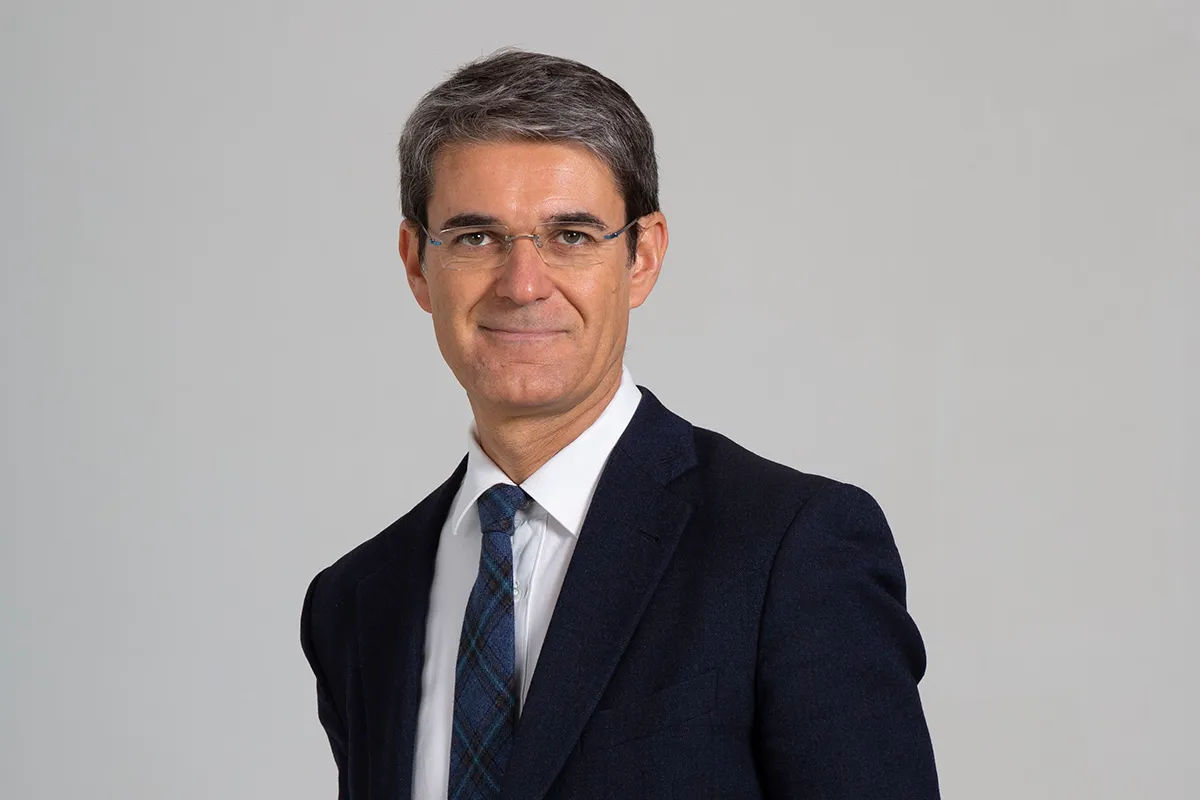

A conversation by Paolo Barbato with Matteo Colleoni.
30 million Italians (51% of the population in 2021) engage in systematic mobility (vs. 49% in 2011). 42% of these trips are made from a municipality other than the destination (vs. 39% in 2011): a figure that rises to 57% in Lombardy and remains above 50% across Northern Italy. The vehicle fleet used for these journeys includes 53 million motor vehicles with a median car age of approximately 13 years.
These figures outline a complex reality, in which systematic mobility — daily commuting — is far from a residual phenomenon, as it is often perceived, but rather one of the most significant components of the country’s economic and social life.
To explore this dimension, I met with Matteo Colleoni, Rector’s Delegate for Sustainability and Mobility Manager at the University of Milano-Bicocca, where he teaches Urban Political Studies. Together, we addressed the topic of systematic mobility from a perspective that interweaves academic research, operational management and strategic vision: a privileged vantage point that reveals the real complexity of what happens between the front door and the desk.
A perception error: underestimating commuting
PB: Professor, let’s start with some context. When we talk about systematic mobility, we’re talking about a phenomenon that in Italy is often treated as marginal. Yet the numbers tell a different story.
Matteo Colleoni: Exactly. The latest ISTAT census tells us that approximately 30 million people commute every day for systematic mobility. 51% of the Italian population. And 42% of this share moves to a municipality different from their place of residence (over 50% in Northern Italian regions). The origins and destinations of our journeys are increasingly distant from each other, and this has an important socio-economic significance.
In Italy, we make the mistake of not giving commuting its due weight. It is not a residual phenomenon in daily mobility: it is one of its most significant components. Yet, to give a concrete example, Italian universities only began about ten years ago to address the mobility of staff and students, as if how people reach their place of work or study were not the organisation’s concern.
Accessibility is not a topic that can be delegated solely to transport operators. It concerns the flow of people who come to study and work in our places: it is important that they arrive in the best conditions.
Understanding demand, not just managing supply
PB: A theme that emerges strongly from your experience is the relationship between transport supply and knowledge of demand. Historically, attention has focused almost exclusively on infrastructure.
MC: Traditionally, a great deal of attention has been devoted to the supply side: infrastructure, carriers, networks and energy. And rightly so. But what is often overlooked is the complexity of mobility demand. And this demand has changed profoundly.
There are more mobile people than in the past and, in turn, mobility demand is more diversified than before. Urbanisation in developed countries has reached 75-80% of the population. The female workforce has grown, and therefore the number of women commuting for systematic mobility. The elderly population, thanks to increased life expectancy, remains mobile for longer. And the extension of retirement age means that commuting now also involves people over 65.
By now, the various disciplines have found a point of convergence: it is not possible to respond effectively to mobility demand by intervening on supply alone, without a thorough understanding of who is moving, why they do so and under what constraints.
The Mobility Manager and the paradigm shift: targeted interventions, not blanket measures
PB: In your experience at Bicocca, how does this approach translate in practice? What types of interventions prove most effective?
MC: One of the Mobility Manager’s fundamental tasks is to stratify demand according to needs and each person’s system of constraints. This is what I call a positively discriminatory intervention: discriminating not in a negative sense, but in the sense of differentiating interventions based on actual needs and the resulting mobility profiles.
Let me give a concrete example. Some organisations have introduced paid parking for employees: those who can afford it continue to use the car, while the revenue funds public transport subscriptions for those who need them most. It is a policy that grants to some and restricts others, but it responds to a principle of equity in the use of resources.
I don’t always agree with blanket policies, for two reasons. First: funds are limited, and the risk is that once they run out, those with the greatest need are left behind. Second: these policies have proven, in practice, to be less effective. Less informed individuals, who are often those most in need of support, end up being left on the margins.
A community must participate in improving mobility for all. The Mobility Manager must fulfil this function: differentiating interventions, not distributing them indiscriminately.
Modal choices: between habit and awareness
PB: A particularly interesting aspect is the work on individual behaviour. How do you intervene on such deeply rooted habits?
MC: Moving is a habit. Like eating and sleeping. These are the three activities we acquire from childhood and that accompany us throughout our entire life cycle. The way we commute to work functions like a script: a routine we follow automatically, and which within a complex information system is not easy to change.
Research on travel behaviour, known in the literature as VTBC — Voluntary Travel Behaviour Change — tells us two fundamental things. To change behaviour, you must first help the person rationalise their mobility choices: understand their travel sequences, the reasons behind certain modal combinations, and verify whether these are truly effective in achieving the objective.
Then you work with target subjects: people more predisposed to change, whose virtuous behaviour can trigger an imitative effect. But be careful: this is not public service advertising. It’s not enough to say what’s wrong. Systematic actions within a structured process are needed, otherwise resources are wasted and interventions are doomed to failure.
The Ninth Hour: when the journey enters working time
PB: Let’s get to the heart of the reflection: the concept of the Ninth Hour. An idea that is particularly close to our hearts and that gives its name to a project we are working on. Why is it so relevant?
MC: The reference to the Ninth Hour is very apt. If working time averages eight hours, in reality it is not eight hours. There is a ninth hour — and often much more — needed to reach the workplace and return home. A period of time that has historically been kept separate from working hours, but which in reality is a constitutive part of them.
We know, for example, that our students at Bicocca have an average home-to-university distance of 32 kilometres, and it takes them an average of one hour and 45 minutes to cover it. So the study day is not eight hours: it is over ten. If we apply the same data to employed workers, the picture is similar.
One of the Mobility Manager’s tasks is to make everyone aware that working time includes the time needed to reach the workplace. INAIL, not coincidentally, has contractualised the in itinere accident: an accident that occurs on the home-to-work journey is covered by insurance, because that journey is considered an extension of working hours. It is a ninth hour already recognised by the insurance system.
Working time is not eight hours. It includes the time to reach the workplace and to return home. The Ninth Hour is already factored into people’s work-related decisions, even if it is not made explicit.
But there is a further aspect. This ninth hour is not necessarily passive time, of purely indirect utility. In contemporary societies, people increasingly carry out activities even during their commute. Travel time can be dense, productive time. And this changes the very nature of commuting: from cost to opportunity, if conditions allow it.
Responsibility at three levels: institutions, organisations, individuals
PB: Who should take charge of this transformation? Responsibility is shared, but not always clear.
MC: Accountability operates at three distinct levels. The first is institutional: the law requires the appointment of Area Mobility Managers in municipalities with more than 50,000 inhabitants and Corporate Mobility Managers in organisations with more than 100 employees per local unit. This is not an arbitrary regulation: it is part of a system that recognises the environmental, economic and social consequences of systematic mobility.
The second level is that of the Mobility Manager themselves, who has a dual responsibility: towards the Area Mobility Manager, to whom they must transmit origin-destination mobility data, and towards their own organisation, through surveys and improvement interventions.
The third level is individual. But here the distinction is fundamental: individuals must be helped, not simply held accountable. Almost all of us underestimate the real cost of private motor vehicle mobility and overestimate that of public transport. We can say how much a train ticket costs, but we rarely calculate the actual cost of a car journey, including depreciation, maintenance, taxes and the value of time.
The Mobility Manager has a knowledge mission: to ensure that individuals are aware of their mobility behaviours and their environmental and socio-economic consequences.
The territorial effect: from bike stations to inter-organisational collaboration
PB: The bike station experience at Bicocca is an interesting example of how a localised infrastructure intervention can generate effects at a wider scale.
MC: Our modal split shows approximately 75% of trips made by public transport, 19% by private car, and the remainder by active mobility, of which the cycling share is limited, around 5%. This figure is not surprising: the distances people travel from are long, and cycling as an exclusive mode has objective limitations.
Bike stations are not a definitive solution for the low cycling modal share. They are one of the possible interventions for those who could use a bicycle — because they live close enough — but did not do so due to the lack of secure storage. The bike station offers protection, maintenance tools and a badge system that allows monitoring of flows.
But the most significant value is the territorial effect. When we inaugurated the bike stations, we invited all the Mobility Managers from companies in the neighbourhood. In the Bicocca district, we created a coordination network among Mobility Managers: we exchange best practices, share knowledge, and discuss joint interventions. For example, we are evaluating the sharing of shuttle services between the university and nearby companies, to serve the entire neighbourhood’s flow with a single solution.
Sustainable mobility is achieved through coordination actions. No Mobility Manager can work alone: coordination among organisations in the same area has very positive effects.
A message for Mobility Managers
The conversation with Professor Colleoni highlights a point that, at Wiseair, we consider central: the Mobility Manager cannot be a mere compliance figure. The complexity of mobility demand, the need for targeted and data-driven interventions, the growing role of territorial coalitions: these are all elements that require advanced tools, strategic vision and the ability to generate measurable impact.
Three points stand out from Professor Colleoni’s reflection.
First: understanding demand is not optional, it is a prerequisite. Without granular data on the composition, distances, constraints and habits of your workforce, any intervention risks being ineffective or, worse, reinforcing inequalities.
Second: the Ninth Hour is not an abstract concept. It is a reality that impacts the productivity, safety and well-being of millions of workers. Companies that recognise and manage it strategically gain a concrete competitive advantage in terms of talent attraction and retention.
Third: the Mobility Manager’s work does not end within the company perimeter. Territorial coalitions, the exchange of practices and the sharing of resources among organisations in the same area are the lever for moving from isolated interventions to systemic transformations.
Professor of Urban Political Studies at the University of Milano-Bicocca. Chair of the Mobility Management Technical Board at the Ministry of Infrastructure (2022–2024), national coordinator of the sustainable mobility working group for the PNR 2021–2027, and Rector's Delegate for Sustainability and Mobility Management.