
Wings, pedals and People Mover: how Bologna Airport rewrote the rules of mobility management
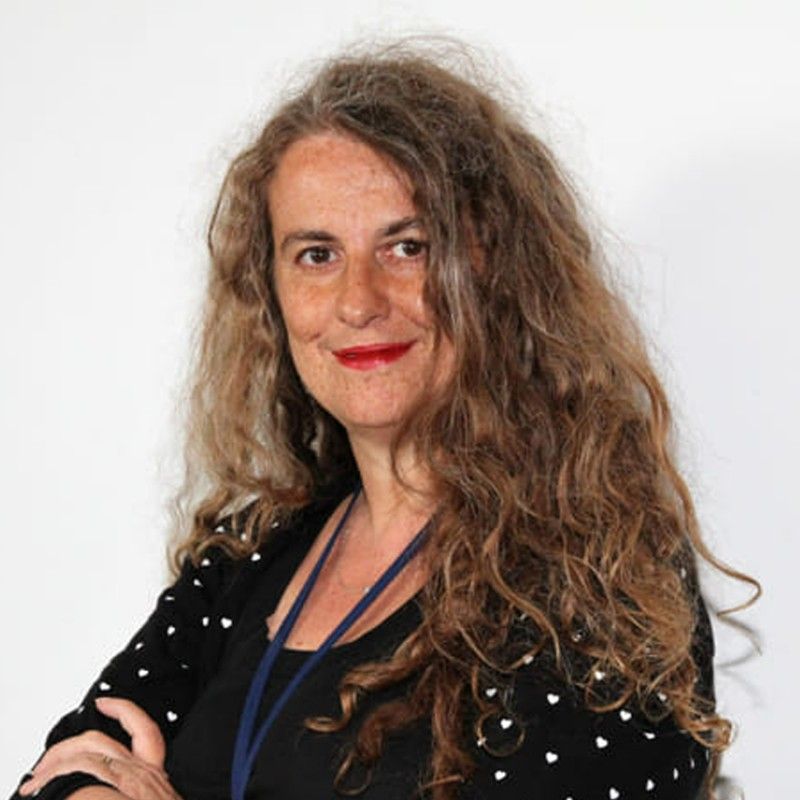

Interview by Paolo Barbato with Barbara Melotti.
An airport is not a company like any other. It is an ecosystem made up of dozens of different operators, with working hours covering 24 hours a day, seven days a week. Ground handlers, airlines, restaurants, security, maintenance: each with their own contracts, their own shifts, their own geographical origins. Applying mobility management in such a context means dealing with operational constraints that most companies never encounter.
Bologna Guglielmo Marconi Airport, Italy’s seventh largest airport by passenger numbers with approximately 10 million annual transits, located in the heart of the Emilian food valley and the automotive and packaging industrial districts, has built one of the most articulated and measurable sustainable mobility programmes in the Italian landscape in just a few years. The MuoviAMOci project, launched in 2020 as an experimental MaaS (Mobility as a Service) integrated transport initiative, has progressively involved the approximately 600 employees of the AdB Group and the 2,800 members of the airport community, for a total catchment of approximately 5,000 people.
The numbers speak for themselves: over 210 tonnes of CO2 saved, 627,877 sustainable kilometres tracked, a 21% decrease in cars in parking compared to 2019 despite a 20% increase in staff. And one figure that alone tells the story: the percentage of employees subscribed to public transport rose from 4.72% in 2019 to 27.34% in 2025.
I spoke with Barbara Melotti, Mobility Manager of Bologna Airport, who also holds the experimental role of Airport Zone Mobility Manager.
The context: challenges and complexity of an airport
Paolo Barbato: Barbara, let’s start with the context. An airport is a complex reality by definition. What were the main challenges in setting up a mobility management programme?
Barbara Melotti: The biggest challenge was designing solutions that would work for very different mobility profiles. We have employees who work night shifts, when public transport doesn’t operate. We have staff coming from all over Emilia-Romagna, not just from the urban area of Bologna. And we have an airport community that includes dozens of companies, sub-concessionaires, handlers, agencies, suppliers, subcontracted companies, many of which are below the 100-employee threshold and therefore don’t have their own Mobility Manager.
That’s why we introduced the figure of the Airport Zone Mobility Manager: a role made available by the management company that enables integrated actions to be extended to the small and medium-sized enterprises operating at the airport site. Without this coordination role, a significant part of the community would have been excluded.
The MuoviAMOci project: an innovative welfare model
Paolo Barbato: The MuoviAMOci project is at the heart of your strategy and was born as a true innovative welfare model. Can you tell us how it works?
Barbara Melotti: MuoviAMOci is an experimental integrated transport project based on MaaS principles. The underlying idea is to offer a single customisable annual travel pass that combines different modes of transport: urban and suburban buses, metropolitan and regional rail service through the “Mi Muovo anche in Città” formula, People Mover, electric car sharing with Corrente, bike sharing, and more recently a taxi bonus through the regional app RogER.
The subscription was initially funded through the ministerial call #Conciliamo, where we ranked twenty-fourth out of over 600 participants. Thanks to that funding, the cost for Group employees dropped to 10 euros per month. After the funding ended, the company continued to strongly subsidise the cost, bringing it to approximately 18 euros per month. 85% of subscribers choose the People Mover plus TPER urban network combination, 13% add regional rail, and 2% opt for electric car sharing.
All stakeholders were involved in the implementation: TPER for public transport and car sharing, Marconi Express for the People Mover, the Municipality and Metropolitan City, the Emilia-Romagna Region, and the mobility agency SRM. This is an important point: MaaS doesn’t emerge from a unilateral company action, but from coordination work with the entire territorial transport system.
The solution for night shifts
Paolo Barbato: One aspect that struck me is the solution for night shifts. How did you address the problem of coverage during hours not served by public transport?
Barbara Melotti: It was a fundamental step. The need of shift workers who start or finish their shift when public transport isn’t running led us to include the Corrente electric free-floating car sharing in the MaaS subscription. We negotiated a free window from 2 to 4 in the morning to and from the airport, which is in addition to the 20 monthly minutes included in the basic subscription and the 5-hour monthly option. We have 12 dedicated parking spaces at the Wait Zone.
We also activated the Drive Back mechanism: when too many car-sharing vehicles accumulate at the airport, we send a voucher by email to airport community subscribers to drive the cars back towards the city with a 99% discount. The operator redistributes the fleet, the employee travels practically for free. It’s a mutually beneficial mechanism that works because it’s concretely advantageous for both parties.
The cycling strategy and FIAB Gold certification
Paolo Barbato: Let’s talk about the cycling strategy. The airport is only 6 km from the city centre and you’ve obtained the FIAB Bike Friendly Gold level certification. What’s behind this achievement?
Barbara Melotti: A systematic investment in infrastructure and services. We built the BLQ Bike Station beneath the Marconi Express station, with a secure parking area, video surveillance connected to the border police, a bike sharing hub with Ridemovi and Corrente, racks for free e-bike and scooter charging, and changing rooms with showers and lockers. We created dedicated cycle paths for safe access and are contributing to the connection with the EUROVELO 7 “Sun Route” corridor, with a cycle-pedestrian path currently under construction.
Thanks to the Mobility Management agreement with the Municipality of Bologna, home-to-work bicycle commutes certified through an app entitle employees to a reimbursement of 0.20 euros per kilometre, up to a maximum of 50 euros per month. In 2025, 60 employees cycled 27,671 km to get to work, corresponding to approximately 10 tonnes of CO2 avoided. With the MIMOSA project, we also obtained 30 pedal-assist bicycles on loan from the Region for operational use and home-to-work commuting. The Gold certification is the recognition of a system that covers all functional areas: infrastructure, services, coordination, communication.
Measuring the impact
Paolo Barbato: How do you measure the overall impact of the programme?
Barbara Melotti: Measurement is a pillar of our approach. We activated a smartphone application that allows employees to report the sustainable impact of their home-to-work commutes in terms of CO2. The platform tracks all sustainable trips, from carpooling to public transport, from cycling to smart working, and displays the savings in economic and environmental terms.
Over the 2023-2025 period, the numbers have grown steadily: 210,508 kg of CO2 saved and 627,877 sustainable kilometres, with an average of 765 kg of CO2 saved per employee in 2025. Bike sharing generated over 25,000 trips for 85,196 km and 30 tonnes of CO2 saved. Electric car sharing totalled 12,108 trips for 249,551 km, with 33 tonnes of CO2 avoided. Overall, the initiatives have cut private vehicle use to reach the airport by 30% compared to 2019.
Gamification and rewards
Paolo Barbato: You’ve also introduced gamification and reward elements. How much do they matter in changing behaviour?
Barbara Melotti: Gamification is an excellent tool for internal promotion and engagement. The app works with a challenge and reward mechanism that helps maintain attention and create a sense of community around the topic of mobility. We organise Bike to Work Day, Mobility Day, periodic and seasonal actions to motivate employees.
However, it’s important to be honest: gamification alone doesn’t shift behaviour structurally. It works as an activation and maintenance lever, but only if there are concretely valid mobility alternatives and objective convenience at the base. If the integrated subscription didn’t cost 15 euros per month, if the People Mover didn’t connect the station to the airport in 7 minutes, if there were no night-time car sharing for shift workers, no leaderboard or points challenge would produce lasting results. Gamification amplifies what already works, it doesn’t replace it.
Next steps
Paolo Barbato: Looking ahead, what are the next steps for the project?
Barbara Melotti: We’re working on multiple fronts. On the infrastructure side, the most significant project is the cycle-pedestrian path that will connect the airport with the EUROVELO 7 “Sun Route” corridor, the European cycling route that runs from the North Cape to Malta for 7,409 km. The path is under construction and responds to a specific need: connecting the airport with the city in a completely carbon-neutral way, offering a concrete alternative both for home-to-work commutes and for the growing demand for urban cycling and cycle tourism. The MaaS package has already been extended to taxi rides and in the future could also be replicated for passengers, not just employees. And there’s an aspect I consider strategic: the dissemination and cross-pollination across the entire airport community, promoting a culture of active and sustainable mobility that also involves smaller companies through the role of the Zone Mobility Manager.
The experience of Bologna Airport demonstrates a principle I consider fundamental: mobility management works when infrastructure precedes communication. Barbara Melotti and her team didn’t ask employees to change behaviour as an act of faith. They first built the conditions for change to be concretely possible and convenient: safe cycle paths, integrated subscriptions at an accessible cost, night-time car sharing for shift workers, changing rooms and charging stations. Only then did they activate the lever of incentives and engagement.
The figure of the Airport Zone Mobility Manager is an organisational innovation that deserves broader reflection. The idea of a subject that coordinates mobility policies on behalf of an entire ecosystem of companies, many of which are too small to have their own representative, is exactly the kind of approach that can be replicated in industrial districts, industrial areas, and logistics hubs.
It’s a model that moves in the direction of what at Wiseair we call Territorial Coalitions of Mobility Managers: structured aggregations of professionals who, going beyond the boundaries of individual companies, build sufficient critical mass to dialogue with public administration and influence local mobility policies.
The shift from 4.72% to 27.34% of subscribers in six years, combined with the 21% decrease in cars in parking despite a 20% growth in employees, is perhaps the most eloquent figure of the entire interview. It confirms that revolutions are not needed: what’s needed are coherent systems, infrastructure that anticipates demand, reliable data to measure progress, and the patience to build results year after year.
Barbara Melotti is the Mobility Manager of Bologna Guglielmo Marconi Airport and Airport Zone Mobility Manager. She is the creator of the MuoviAMOci project, the experimental MaaS integrated transport program that has transformed mobility at the Bologna airport.